
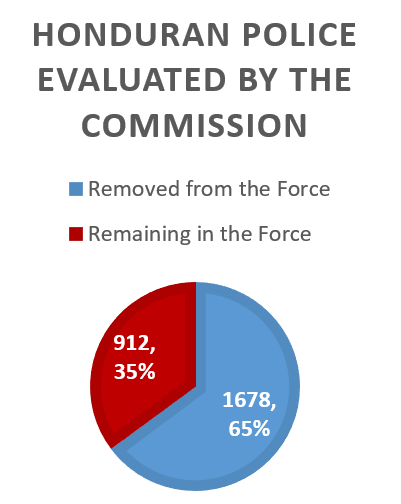
Honduran Police Reform Commission Fires Two-Thirds Of Corrupt Officials

December 15, 2016

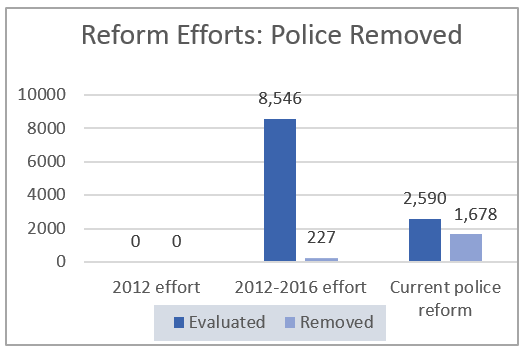
As of December 14th, 2016, they have evaluated over 2,500 members of the force, including every high-ranking official, and fired 1,678 for corruption or failure to meet institutional standards. Of those fired, 364 were high-ranking officials, including six of the nine police generals.


When Sandra’s husband was killed in front of her, she was too afraid to go to the police. She didn’t trust them. Few Hondurans did.


Read more about Sandra’s story here.


In an opinion survey released in March, 2016, 70% of Hondurans agreed with the statement “Honduran police receive money from drug trafficking”. Fewer than 40% placed trust in the police, a lower score than almost any other government institution.


For years, police officers made headlines for their involvement in kidnapping, theft, drug trafficking, and even murder. For years, gang leaders infiltrated the highest ranks of the police force, and used their authority to carry out crimes such as extortion and extrajudicial killings.


That meant that most Hondurans who suffered from violence, people like Sandra, never reported their cases, and never saw justice.


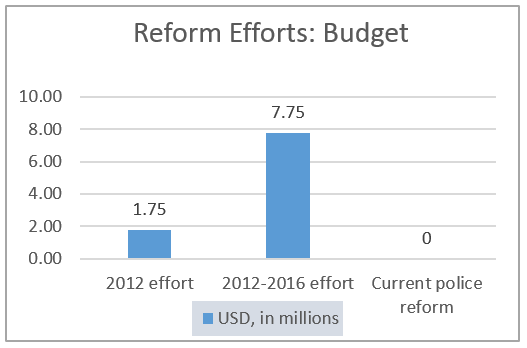
The Honduran government has made several attempts at reforming the police, spending millions of dollar to fire just a few hundred entry-level officers.


Since 2000, Honduras has removed just 227 officers at a cost of $9.5 million. The ringleaders of the worst crimes have continued to abuse their position.


A few months ago, the gravity of this situation in the Honduran police could no longer be ignored.


On April 5th, 2016, a Honduran newspaper revealed that top-ranking generals of the Honduran National Police Force had planned the assassinations of two anti-drug officials, financed by drug kingpin Wilter Blanco. Days later, the New York Times published the names of all police officers involved in the murder, most of whom were still serving in active leadership roles in the police.


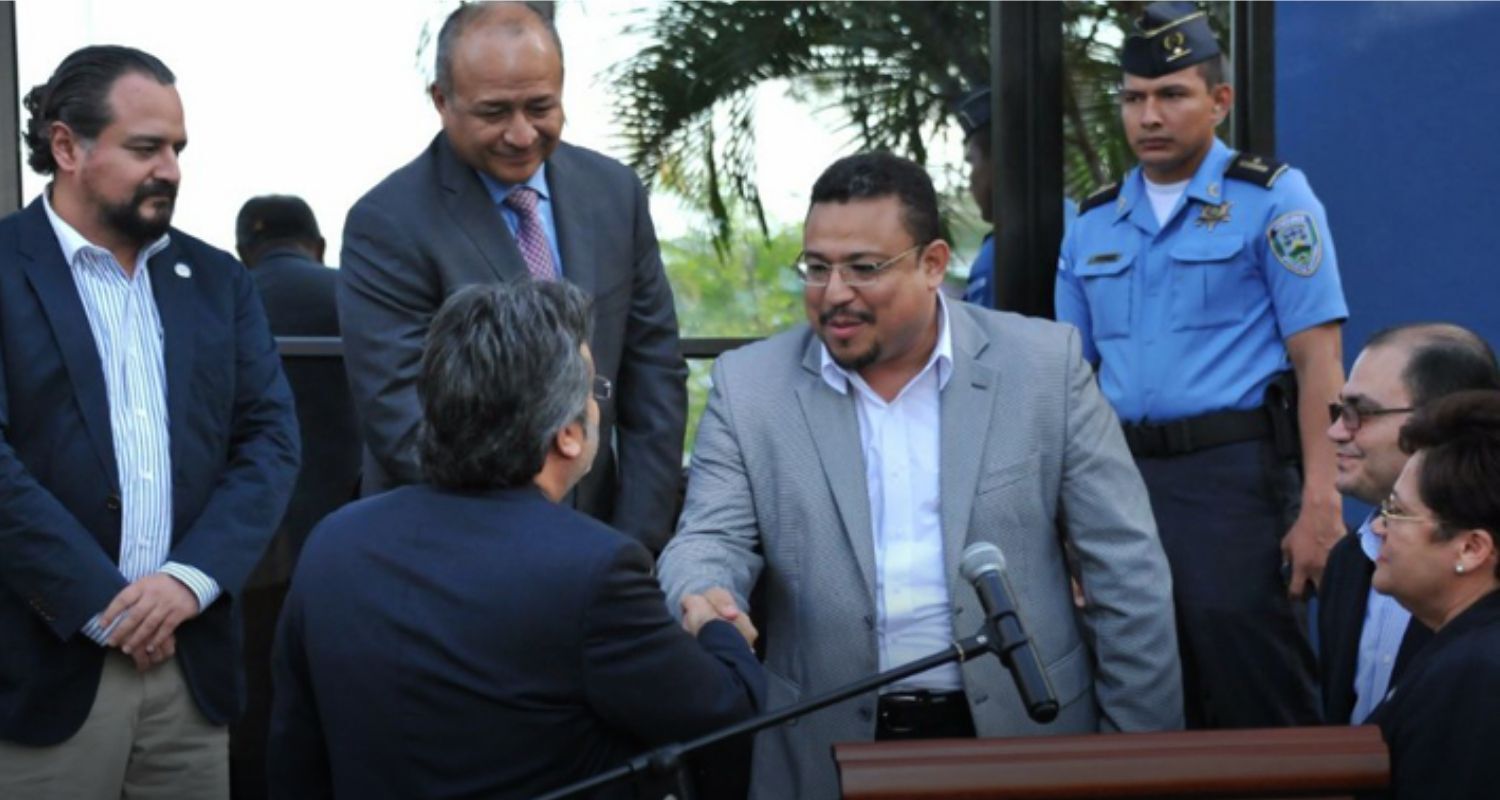
In response to the resulting public outcry, President Hernandez appointed seven individuals to a special commission for the purging and restructuring of the Honduran National Police force. Four of the seven are ASJ (formerly known as AJS) staff or board members, and all are performing the dangerous work without pay.

With no additional budget from the state, the current Police Reform Commission has been more effective than the previous sixteen years combined.


As of December 14th, 2016, they have evaluated over 2,500 members of the force, including every high-ranking official, and fired 1,678 for corruption or failure to meet institutional standards. Of those fired, 364 were high-ranking officials, including six of the nine police generals.


The firing of corrupt police is just the beginning of the Commission’s work. In addition to evaluating the remaining 9,000 entry-level officers, the Commission members will begin to shift their focus towards creating a new and more transparent police force.

Among key initiatives: all remaining officers will be re-trained and recertified, and the police force will be restructured, removing redundant or vague positions. Over the next five years, the force will be doubled, bringing the number of police officers in line with standards recommended by the UN, with all new officers hired competitively and trained at revamped police academies – over 3,000 new officers have already graduated from the new, improved training program.


The complete transformation of Honduras’ police force will not be easy. But for the first time, it seems possible.


Though we mourn with people like Sandra, we also rejoice with them at the thought that someday, when tragedies occur, the police will be able to respond. We look forward in hope to the day when the Honduran police will be trusted to prevent these tragedies from happening again.


For more on Honduras’ Police Purging Commission, check out ASJ’s Frontline Report – an on-the-ground report designed for US lawmakers.


*On December 15, 2016, 419 additional officers were fired.


June 26, 2026
Notes on Belonging from a Honduran “Gringa.”
May 5, 2026
Joy as a starting point for justice work
April 13, 2026
Joy and Art Merge in a Solemn Ceremony 
February 19, 2026
A Spotlight On Our Dedicated Volunteers
February 19, 2026
How Hondurans Live Out The Joy of Democratic Participation
February 19, 2026
A Reflection from ASJ-Canada Board President, Matt Van Geest
February 19, 2026
Words from the Executive Director
January 27, 2026
Thirsty For Justice
Hondurans cast their ballots during the November 30, 2025, general election, which saw historic vote
By Brian ASJ December 10, 2025
Hondurans cast their ballots during the November 30, 2025, general election, which saw historic voter turnout and a peaceful process supported by more than 12,000 national and international election observers working to safeguard transparency.
Show More