The body, known as the Mission of Support Against Corruption and Impunity in Honduras (MACCIH, by its Spanish initials), will be comprised of international prosecutors, criminal investigators, and judges who will oversee a group of Honduran counterparts in high-profile corruption cases. Convictions in such cases are key to solving other challenges in Honduras, including persistent violence.
Frontline Report: The Civil Society Movements Promoting Positive Change In Honduras
April 20, 2016
An “on-the-ground” perspective from Honduras’ leading civil society organization working on matters of anti-corruption and citizen security
THE CIVIL SOCIETY MOVEMENTS PROMOTING POSITIVE CHANGE IN HONDURAS
Early 2016 brought sweeping developments that will likely shape Honduras for many years to come — developments that will affect efforts to confront Honduras’ persistent challenges of violence and corruption, plus their byproduct: migration to the U.S.
Corruption is an obstinate problem in Honduras — one that has received significant international attention. Recent, major scandals include millions of dollars stolen from the Honduran Social Security Institute (a portion going to the ruling party’s election efforts). As a part of the worldwide FIFA scandal, the U.S. Department of Justice indicted a former Honduran president. A former vice-president faces extradition to the U.S. for laundering drug money, and a Congressional leader is facing charges for running a corrupt pharmaceutical company. Thousands of citizens have taken to the streets across the country to demand action, inciting government measures that include indictments in corruption cases and agreeing to the MACCIH (mentioned below).
This edition of the Honduras Frontline Report looks at how the international community, Honduran civil society, and the Honduran government have responded to these issues. It also explains some of the broader context surrounding the issues, including a newly-elected Supreme Court.
This is a hopeful moment for Honduras. Although ugly corruption scandals and partisan political fighting have dominated headlines, there is an even more powerful story coming out of Honduran civil society. Momentum is swelling among civil society groups, including the Association for a More Just Society (ASJ, formerly known as AJS), to reform a government and economy undermined by corruption and violence. For an example of this momentum, see the last article in this report, which focuses on unprecedented efforts by civil society to investigate strategic departments of the Honduran government and to hold those departments accountable to outlines for improvement.
There are encouraging signs of change on the part of the government. In addition to the initiatives laid out in this report, one particularly encouraging change is the country’s decline in homicides — a drop of 31 percent in three years. In the last two years, the Attorney General’s office has won 26 guilty verdicts in corruption cases — an amount equal to about half the entire cases won during the previous 19 years put together. The 11 extraditions of key drug traffickers to the U.S. is helping to dismantle organized crime. Civil society has specifically focused on these areas (homicide reduction, using extradition, and reaching guilty verdicts in corruption cases). These and other examples point to a Honduras that is headed for change.
The U.S. has recently increased its aid to Honduras, a step ASJ actively supported and a step in the right direction, as long as the aid incorporates rigorous accountability and transparency measures plus the input of Honduran civil society groups. Disengaging from Honduras now because of corruption and violence would be a major misstep [1]. This is exactly the time to be active in monitoring and supporting efforts by citizens and civil society to transform Honduras.
This Honduras Frontline Report provides information on the following important events relating to the fight against corruption and violence:
- Anti-Corruption Body Established Through Cooperation of OAS and Honduran Gov’t
- U.S.-Supported Alliance for Prosperity Depends on Civil Society Participation
- Strenuous Honduran Supreme Court Election Points to Challenges, Opportunities, and Optimism
- Anti-Corruption Investigations Spur Reforms Crucial for U.S. Assistance
ANTI-CORRUPTION BODY ESTABLISHED THROUGH COOPERATION OF OAS AND HONDURAN GOV’T
An important new agreement signed in January by Honduran President Juan Orlando Hernández and the Organization of American States (OAS) established a new anti-corruption body to investigate corruption and audit the Honduran justice system
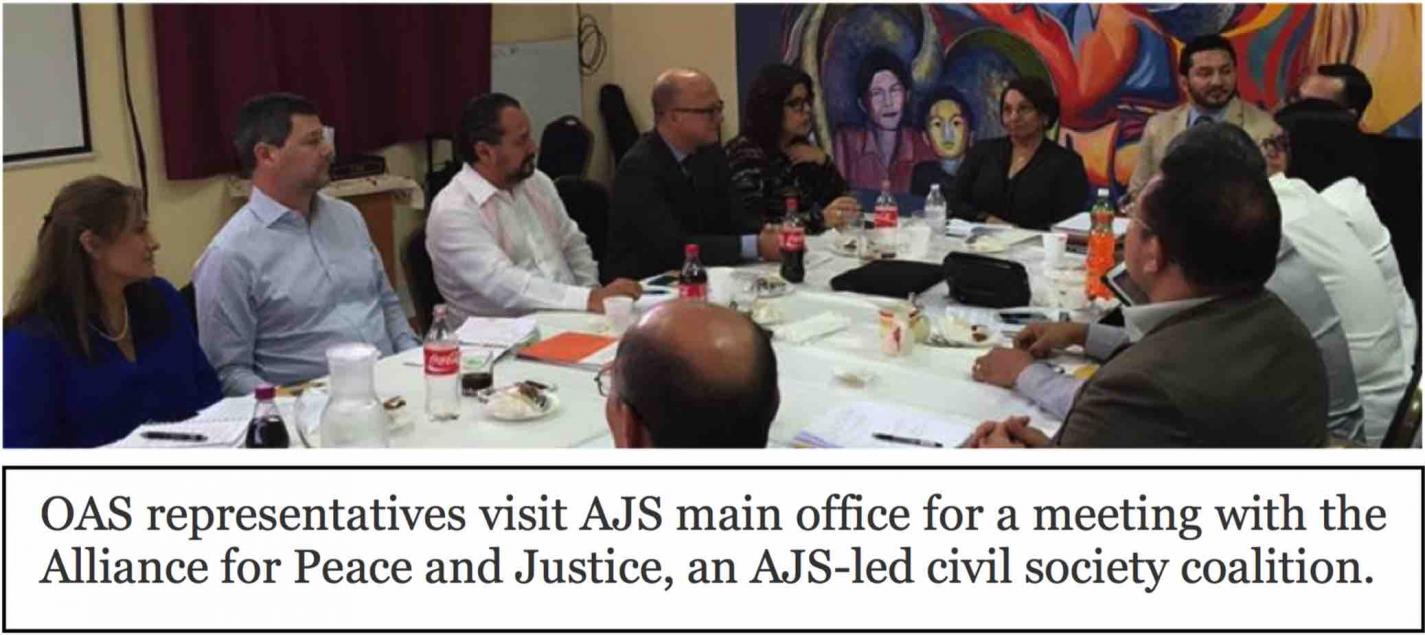
The MACCIH is strengthened by important powers that ASJ believes must be protected by the Honduran government in order for the MACCIH to have success. These powers include guaranteed access to any official document, confidentiality, and the freedom to select cases. Additionally, the government commits itself to resolving any obstacles the MACCIH encounters in carrying out its investigations. The MACCIH has the power to withdraw if the government ceases to collaborate.
Another encouraging component of the MACCIH is the individual who will head the mission as its spokesperson: Juan Federico Jimenez Mayor, a former Peruvian prime minister, minister of justice and human rights, and constitutional law expert who has advised widely in judicial and legal reform throughout Latin America [2].
It is important to note a few concerns. The Honduran body will not be able to act as co-plaintiff in judicial proceedings. Also, there are seven entities within the MACCIH that will audit security and justice institutions and propose reforms; these efforts can distract from the main goal of producing guilty sentences for acts of corruption, a key to winning the support of the Honduran population. Finally, the expressed power to interview any state or military official was removed from the final draft of the MACCIH’s mandate, weakening its investigative capacities.
While it is no panacea, the MACCIH merits support from the international community as it undertakes its difficult work. It is too early to tell if the MACCIH will achieve its stated goals, but it will provide a kind of international help and expertise that is unprecedented in Honduras. As such, ASJ — an organization that has been working against corruption in Honduras since 1998 — has high expectations for this show of support. ASJ will deliver 150 of its own investigative files from the past ten years to the MACCIH and will monitor the body’s progress. ASJ is committed to both providing all support possible for the mission’s success and pressuring the group to ensure the demands of the Honduran people are met.
U.S.-SUPPORTED ALLIANCE FOR PROSPERITY DEPENDS ON CIVIL SOCIETY PARTICIPATION
The omnibus appropriations bill for 2016 passed by the U.S. Congress in December contained a much needed $750 million slated for Central America in support of the Alliance for Prosperity in the Northern Triangle of Central America (APP). Of the funds, $98 million was designated for Honduras, which will also benefit from the $416 million slated for regional initiatives.
It is difficult to overstate the importance of involving Honduran nongovernmental groups in monitoring the effectiveness of this aid to Honduras. The U.S. aid increase to Central America is substantial: the $750 million for FY 2016 equals about half of all assistance to Central America from the U.S. and the Millennium Challenge Corporation in the last 10 years [3]. Through working with Honduran civil society to design and monitor projects, this new funding will have a significantly greater impact compared to the limited results of past U.S. efforts [4] Particularly important is collaborating with civil society on government accountability and anti-corruption efforts, to protect aid from being siphoned off [5].
ASJ will be part of a committee to oversee the Honduran government’s implementation and monitoring of the APP funding. According to the U.S. Congress, civil society organizations must be consulted in the design and evaluation of the activities of the plan, with 50 percent of the funding being contingent on this and other stipulations, including curtailing the use of the military in internal policing, increasing the capacity and independence of the Attorney General’s office, and effectively prosecuting corrupt officials [6]. To ensure the most effective use of U.S. taxpayer dollars and compliance with Congress’ conditions, the U.S. must consistently demand that the Honduran government heeds ASJ input and accountability efforts.
Partnering with ASJ is advantageous because ASJ has already achieved key anti-corruption wins in Honduras. ASJ uncovered 15,000 false teachers on the Ministry of Education’s payroll, which led to the resignation of a former secretary of education. ASJ uncovered irregularities in government medication purchases, which led to the arrest of the former vice president of congress. As mentioned later on in this document, ASJ is auditing the Honduran government to root out corruption in the government’s public contracts, human resource management, and transparency efforts.
The U.S. can be optimistic about the Alliance for Prosperity. ASJ applauds the U.S.’s increased commitment to Central America’s democracy, security, and economic development.
STRENUOUS HONDURAN SUPREME COURT ELECTION POINTS TO CHALLENGES, OPPORTUNITIES, AND OPTIMISM
An effective and principled Honduran Supreme Court is crucial to curbing corruption, and the court’s decisions have a domino effect that impacts many other issues, including violence [7]. Unfortunately, the Honduran Judicial Branch has defiantly rejected reforms to halt corruption and inefficiency in the courts. This is why ASJ dedicated extensive attention to the election of the new Honduran Supreme Court.
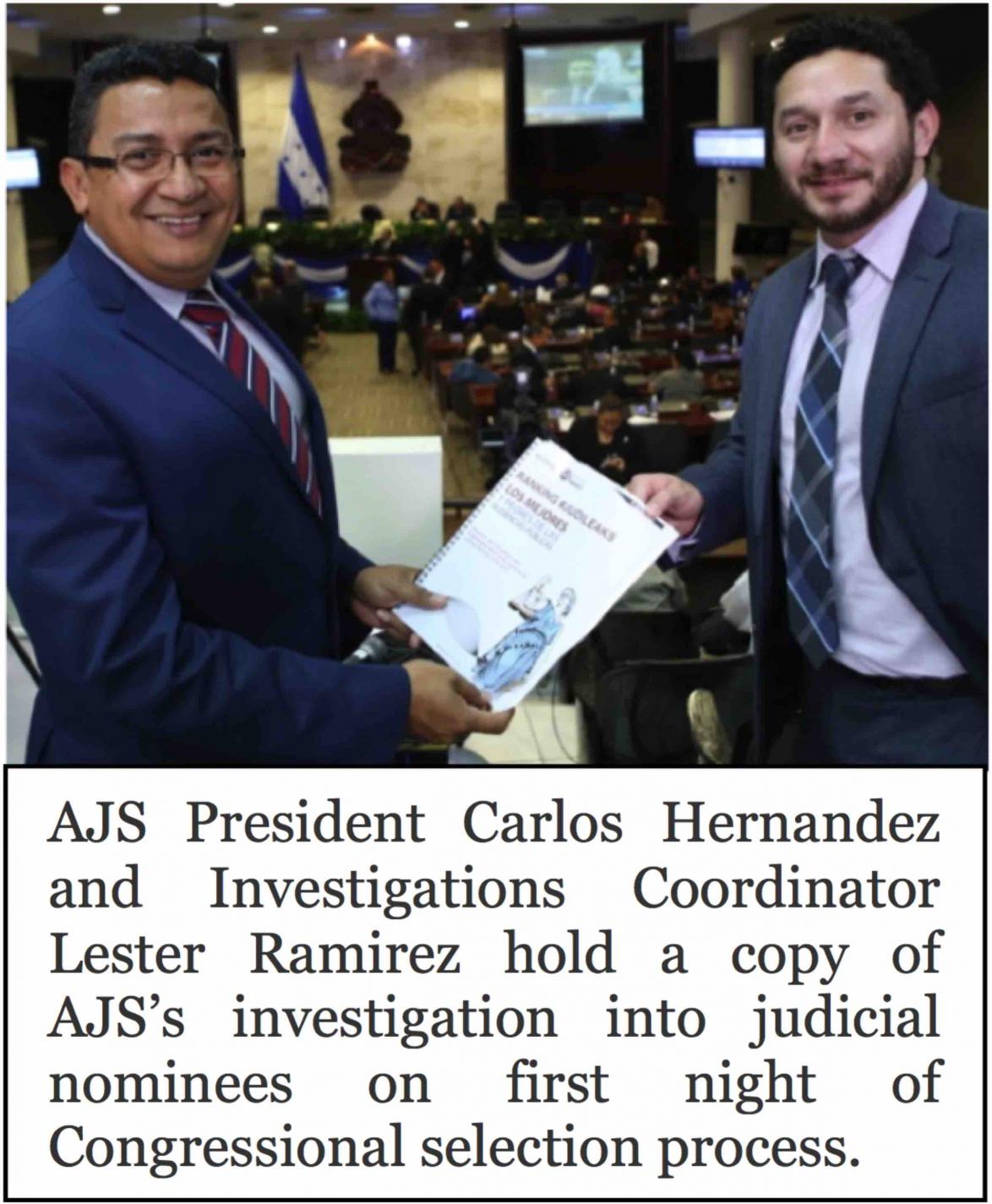
The Supreme Court selection process involved narrowing the field of 200 candidates in several rounds until 45 final candidates remained; from those 45 candidates, the Honduran Congress approved 15 justices for seven-year terms.
Civil society was one of six groups that nominated candidates and helped winnow them down. Thus, civil society leaders were not only observers but active participants who helped in trying to shape a qualified court.
During the months-long selection process for the justices, ASJ conducted a series of investigations into the candidates and built a merits ranking system in collaboration with the Due Process of Law Foundation [8,9]. These studies were shared through both traditional means and social media. This included a dedicated website — where other information about the candidates was also available, including how 24 of the final 98 candidates were flagged by the U.S. Embassy for possible connections to organized crime.
The final selection was a heated and messy process. Partisan fighting broke out, and the election dragged on for an unprecedented three weeks and six voting sessions. Opposition parties accused the traditional parties of trying to pass a flawed and non-representational court, while the traditional parties returned fire with accusations of obstructing a Constitutional process in exchange for bargaining power. The 15 justices who were finally selected are a mixed bag of qualified and unqualified individuals —including one from the U.S. Embassy’s watchlist.
Despite these negatives, there is still optimism about the new court. Without the efforts of ASJ and other civil society actors, the selection would almost certainly have been significantly worse. The process was an important exercise in civil society pushing back against powerful groups and greatly increasing transparency.
Another positive is that the new chief justice of the court takes up the gavel directly after leading the Attorney General’s staff of public prosecutors — an office that pursued significant cases against powerful drug traffickers. His first action was to investigate and release findings that a member of the Council of the Judiciary received an egregious $21 thousand annual travel allowance and that the Council had named 35 relatives to government positions near the end of the previous justices’ term [10, 11].
The court will be under heavy scrutiny and pressure to reform. This pressure will come from Honduran civil society (especially ASJ) and from the international community — including through the MACCIH and the Alliance for Prosperity (both mentioned in sections above).
For Honduran and international observers of the Honduran judicial system, ASJ recommends paying particular attention to the system’s efforts to overcome politicization and to resolve cases in a timely manner — an issue that depends on increasing the quantity and quality of judges and courts.
ANTI-CORRUPTION INVESTIGATIONS SPUR REFORMS CRUCIAL FOR U.S. ASSISTANCE
Corruption significantly undermines efforts to build a more secure and prosperous Honduras. Seeking to curb this corruption, a co-initiative from ASJ and Transparency International (TI) has generated a significant amount of attention inside and outside of Honduras with its monitoring of strategic areas of the Honduran government [12].

In October 2014, TI and ASJ (TI’s Honduran chapter), signed an agreement with Honduran President Juan Orlando Hernández to open up the government’s books for ASJ and TI to scrutinize. This was a major development, the first time TI had ever signed an agreement with a national government that voluntarily consented to such an examination without other incentives. The agreement targets five government sectors: education, health, tax administration, infrastructure, and security; it specifically focuses on human resources and purchases/contracts — areas that are especially vulnerable to corruption [13].
The TI/ASJ team released the first reports from the agreement in November 2015. The reports focused on the departments of education and security, with each receiving failing grades of 31 percent and 28 percent, respectively, in their handling of purchases, contracts, and HR. Among the findings: secretive contract procedures, important files destroyed or missing, and staff hired despite failing aptitude tests.14 In response, the ministers of the Department of Education and the Department of Security each presented detailed improvement plans.
Such stinging scores were obviously not the intent of the government when it agreed to this oversight. Their continued cooperation indicates serious political will to bring about further transparency and accountability in the government.
Two more reports will be released this March, and follow-up reports every six months will ensure that ministers are held accountable for the improvements they promise.
In sum, reasons for hope. The MACCIH is bringing international attention to Honduras, and the Alliance for Prosperity is promising new international funds; this kind of outside accountability is timely and necessary.15 Additional resources must be safeguarded by substantial scrutiny and oversight, especially from Honduran civil society. As civil society gains strength in Honduras and takes on a crucial watchdog role, it fortifies participatory democracy, improves citizen security institutions, and loosens the grip of violence and corruption.
The Association for a More Just Society (Asociación para una Sociedad más Justa) is a Honduran NGO with more than 18 years of experience working on issues of violence and corruption in Honduras; ASJ is a leader in national Honduran coalitions, including the influential Alliance for Peace and Justice.
ASJ projects include:
- Curbing homicides in vulnerable neighborhoods through offering support to community members and trustworthy police
- Investigations and advocacy in government security practices
- Managing a hotline and smartphone app for citizens to report corruption
- Defending land rights
- Legal assistance to poor Hondurans
- Investigative journalism
- Organizing citizen corruption reports in public education and health systems
- “An Open Letter to the US Congress: Increasing Aid to Honduras is Prudent and Opportune, if Properly Focused and Accountable — A Honduran Civil Society Perspective.”
- “Profile: Peruvian Prime Minister Juan Jimenez Mayor – BBC News.” BBC News. July 24, 2012. Accessed March 10, 2016.
- “U.S. Strategy for Engagement in Central America.”
- Korthuis, Aaron. “CARSI in Honduras.” Woodrow Wilson International Center for Scholars. September 2014
- “An Open Letter to the US Congress: Increasing Aid to Honduras is Prudent and Opportune, if Properly Focused and Accountable — A Honduran Civil Society Perspective.”
- H.R.2029 – Consolidated Appropriations Act, 2016.
- “Selección De Magistrados a La Corte Suprema De Honduras.” American Bar Association. January 21, 2016.
- Parsons, Katerina. “In Honduras’ Supreme Court Elections, Civil Society Shows Its Strength.” Justice in the Americas. February 19, 2016. Accessed March 10, 2016.
- Aberle, Niko. “#Judileaks: Ranking the Best and the Worst Honduran Supreme Court Candidates.” Justice in the Americas. February 09, 2016. Accessed March 10, 2016.
- “Piñata: Concejal Gastó 480 mil Lempiras en Viáticos y otro Nombró 15 parientes en cargos”. Proceso Digital. March 1, 2016. Accessed March 9, 2016.
- “Familiones, Aumentos Selectivos, y Festín de Bonos entre Concejales.” El Heraldo. March 1, 2016. Accessed March 11, 2016.
- Biden, Joseph R. “Joe Biden: A Plan for Central America.” The New York Times. January 29, 2015. Accessed March 10, 2016.
- “Big News: Honduran Government Agrees to ASJ Monitoring.” Big News: Honduran Government Agrees to ASJ Monitoring. Accessed March 10, 2016.
- “TI-ASJ Resultados.” Asociación Para Una Sociedad Más Justa. Accessed March 10, 2016.
- “An Open Letter to the US Congress: Increasing Aid to Honduras is Prudent and Opportune, if Properly Focused and Accountable — A Honduran Civil Society Perspective.”

An ASJ-Honduras Blog by Obed García
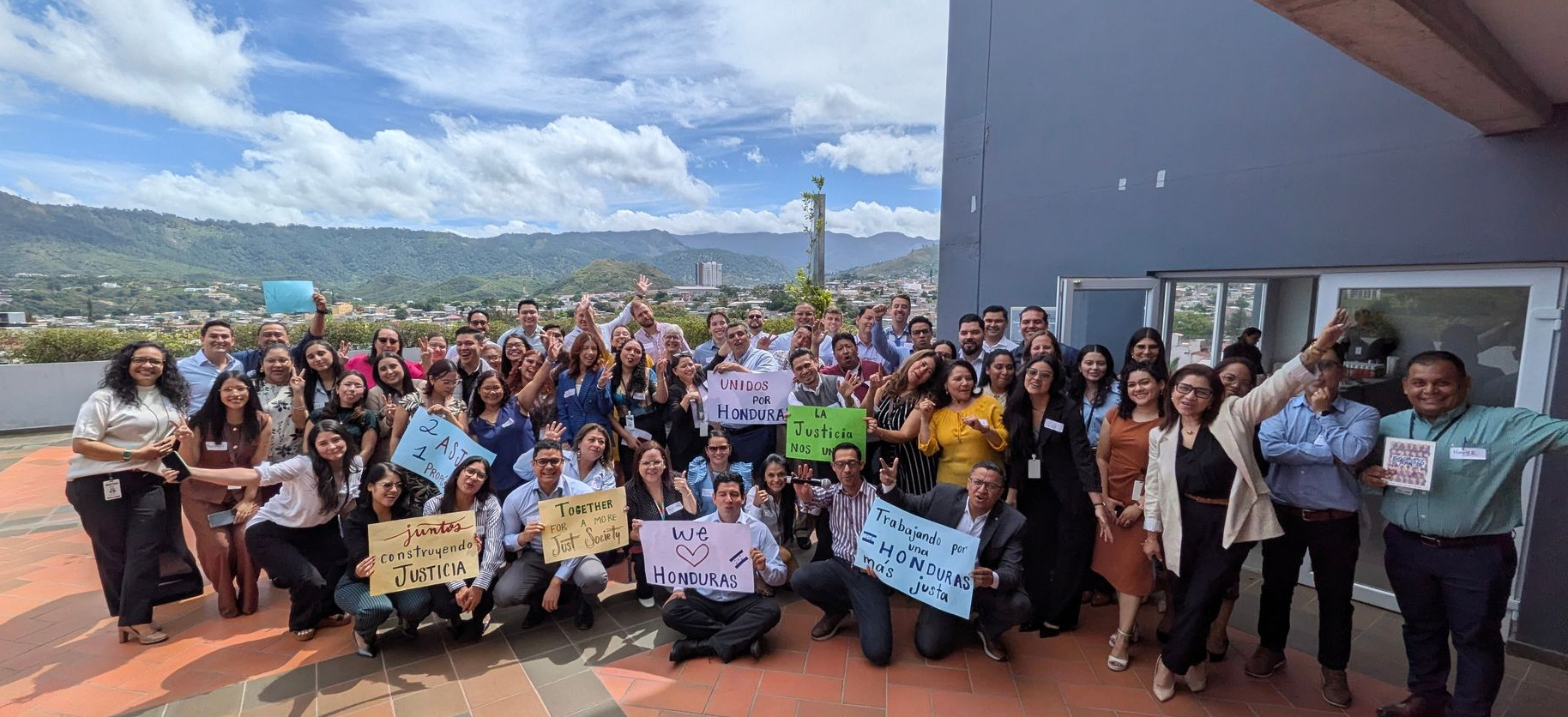
A Time of Connection, Commitment, and Fun!
By Jo Ann Van Engen

By Jo Ann Van Engen
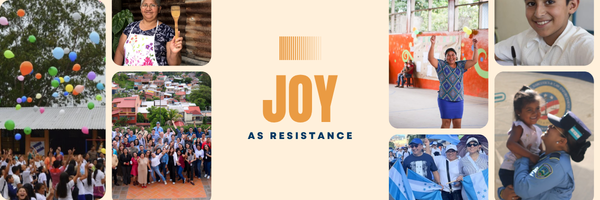
Joy as a starting point for justice work

Joy and Art Merge in a Solemn Ceremony
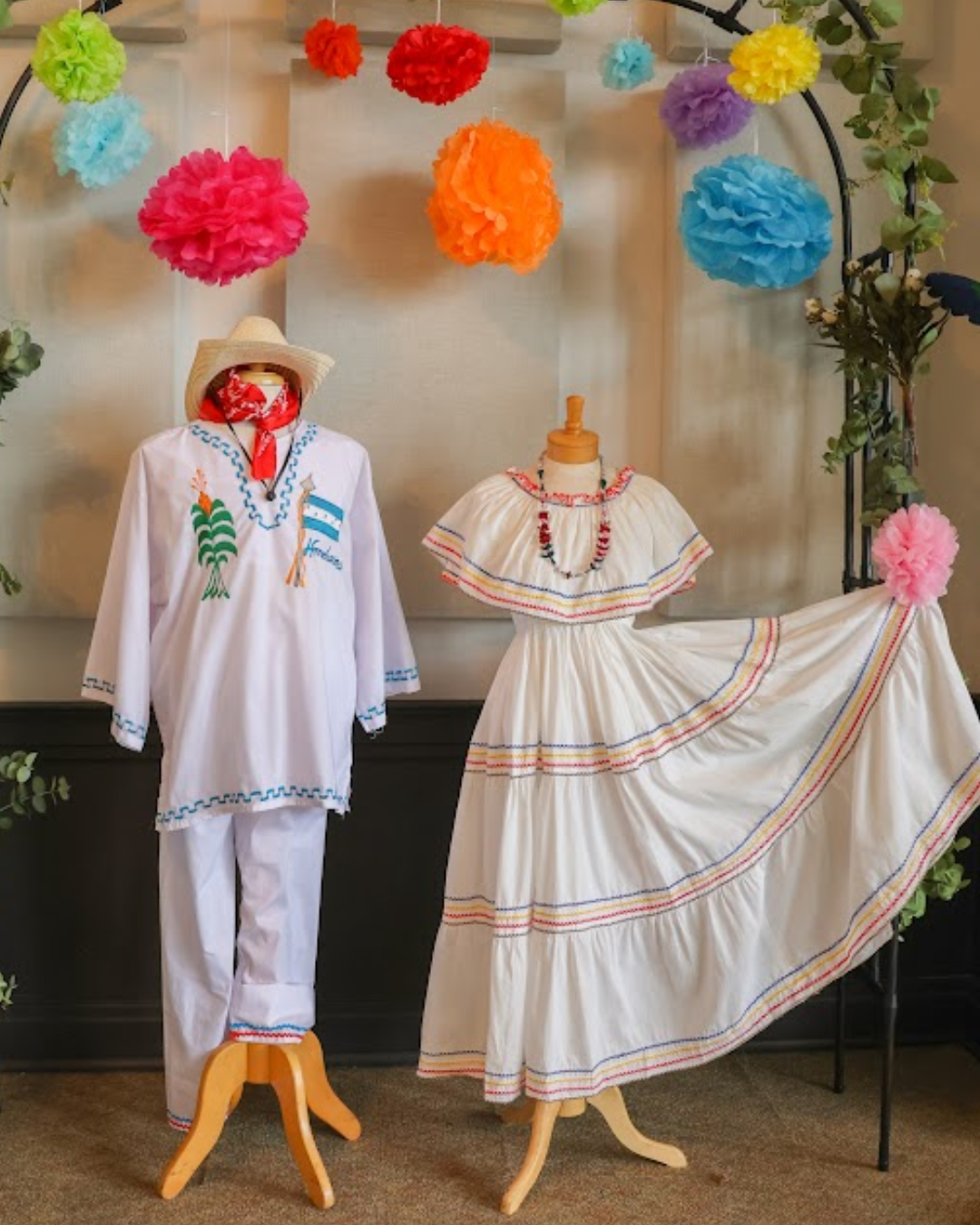
Love, Honduras
A Spotlight On Our Dedicated Volunteers
How Hondurans Live Out The Joy of Democratic Participation