
You’ve most likely read about the unprecedented number of unaccompanied children arriving at the U.S.-Mexican border, more than 50,000 since October of 2015, with 40,000 more projected to reach the border by this coming October (2016). That’s more than 245 children showing up at the border each day without their parents.
Honduras’ Child Migrants – What’s Happening?
July 17, 2014
Originally published on July 17, 2014. Updated on October 19, 2018.
This article by ASJ’s (formerly known as AJS) former Director of Communications, Evan Trowbridge, was originally published by sharedjustice.org.
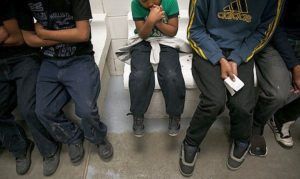
Now, quick question: What country are most of these kids coming from? It is the Mexican border so… Mexico? Nope. For the first time, more unaccompanied children are coming from countries other than Mexico; that would be Honduras and Guatemala, to be specific.
The increase has been most dramatic with respect to Honduras, which has seen 15-times more unaccompanied children arrive at the border compared to five years ago. By my own rough calculation, about 1 in 225 Honduran children showed up at the U.S. border in 2015 — and that’s based on the number who made it to the border, not the number who set out from their homes.
Think of your church, your college, or your neighborhood. What if one in 225 of the people that you know from these places decided that it was necessary to escape a situation they were in by traveling hundreds of miles through a foreign country, on top of notoriously dangerous freight trains, often trusting their lives to smugglers and facing the risk of physical assault, sexual abuse, and other dangers? What if the person you know was a child doing this without a parent? When this happens on the scale that it does in Honduras and other Central American countries, it’s obvious that something’s wrong.
As Christians, our love (and God’s love) for the children of Honduras doesn’t stop at any national borders, and there is an urgent need right now to meet these children’s needs in the U.S. At the same time, we are called to address the factors in Honduras that cause so many to flee. To that regard, the expertise of the organization I work for, the Association for a More Just Society (ASJ), is in combating violence and injustice on the ground here in Honduras.
A crisis like the one we’re witnessing at the U.S. border predictably results in finger-pointing about policy questions in D.C., and a diverse set of reasons are being proposed for this dramatic increase in children at the border. However, it’s beyond dispute that violence — particularly violence fueled by drug trafficking and gangs — has grown out of control in Honduras. This violence cultivates the type of fear and hopelessness that could result in a child fleeing alone for the U.S. border. Any response that only includes U.S. domestic policy changes — instead of looking at root issues in Central America — would be ineffective and short-sighted. We can’t fix a leaking faucet by cleaning the drain.
The “Push” of Violence
Violence and its ugly companions — crime and injustice — have grown strong in Honduras. Honduras had the highest murder rate in the world in the late 2000s, according to the United Nations. Nineteen people are murdered each day in a country the size of the state of Virginia. About 270 children were killed in the first three months of 2015.
Drug trafficking, gangs, corruption, inadequate law enforcement and legal system, lack of education and opportunities – it’s a perfect storm for a cyclical perpetuation of violence that would cause children to flee for the U.S.
A recent report from the United Nations High Commissioner for Refugees found that the majority of children arriving at the border “demonstrate potential international protection needs.” Children who have come to the states tell of witnessing the murders of family members, friends, and classmates. They speak of escaping domestic abuse, sexual abuse, and forced recruitment by gangs and other criminals. In addition to the U.S., other countries — Mexico, Panama, Nicaragua, Costa Rica, and Belize — have also seen a 700% increase in asylum applications since 2009 from El Salvador, Honduras, and Guatemala, all countries with high rates of violence.
I share all of this information because it’s important in understanding the broader context of where the children at the U.S. border are coming from – but I don’t want to paint a negative picture of Honduras as a place of only hopelessness. Honduras is a battleground for justice – and there are many brave people of conviction fighting to establish peace and security. My home is in Nueva Suyapa, a neighborhood in the city of Tegucigalpa, Honduras’s capital. In graffiti on a wall in my neighborhood are words from Romans 8:31, “If God is for us, who can be against us?”
Nueva Suyapa is itself a testimony of what can be in Honduras. Nine years ago, it had three times the national average murder rate. As one of the neighborhoods in Honduras where ASJ has been working with victims of violent crime and with at-risk youth, we’ve seen that rate plummet to a third of that previous level – even as the national rate doubled.
Recently, I was speaking with a neighbor of mine about the children fleeing to the U.S. He was discouraged that so many of his country’s youth were leaving their nation. As we stood in the dirt road outside his door, he pointed to his own son, who was tinkering under the hood of his car. My neighbor could send his child to the U.S., he could possibly even use a visa and avoid the dangerous journey through Mexico, but he knew that his son had been raised in a good family, with a good church community, in a neighborhood that has grown safer, and now this young man had a chance to make a life for himself in Honduras, his home. With more investment, I believe that violence can be halted and that more Honduran children can have hopeful futures in their home country.
It can be hard to comprehend the situations that Honduran children face, but that’s the thing about violence – it escapes reason. We can understand violence; we can know violence; but how often can we really explain (i.e. make sense of) violence?
Right now, there are many arguments in Central America and Washington trying to explain 90,000 children at the U.S. border. Let’s do our best to understand this situation and lament it; let’s do our best to respond and to fix this situation in the U.S. and in Central America; but let’s not try to simply explain it, to reduce broken childhoods to a cause-and-effect. It will never make sense when a young person’s life is snuffed out — no matter who, no matter where.
ASJ’s staff is full of Hondurans with tremendous expertise in understanding the systems, causes, and effects of violence and injustice, and their work has resulted in countless lives being changed in Honduras. Yet, ultimately, I believe their successes aren’t defined by being able to explain senseless violence, but, rather, by responding with something else that doesn’t always make sense — love. This is Christ’s love, as scripture says, a kind of love that compels us to lay down our lives for our brothers and sisters (Romans 5:8, I John 3:16) – a love that’s beyond reason and that flies in the face of violence because it doesn’t even know fear (I John 4:18).
The children at the U.S. border right now have shown bravery beyond their age as they made the perilous journey to the United States. Our challenge as Christians in the United States is to muster bravery of the same caliber, bravery born out of fearless love that acts on behalf of these children in the U.S. and in Central America.
This article by ASJ’s former Director of Communications, Evan Trowbridge, was originally published by sharedjustice.org.

An ASJ-Honduras Blog by Obed García
A Time of Connection, Commitment, and Fun!
By Jo Ann Van Engen
By Jo Ann Van Engen
Joy as a starting point for justice work

Joy and Art Merge in a Solemn Ceremony
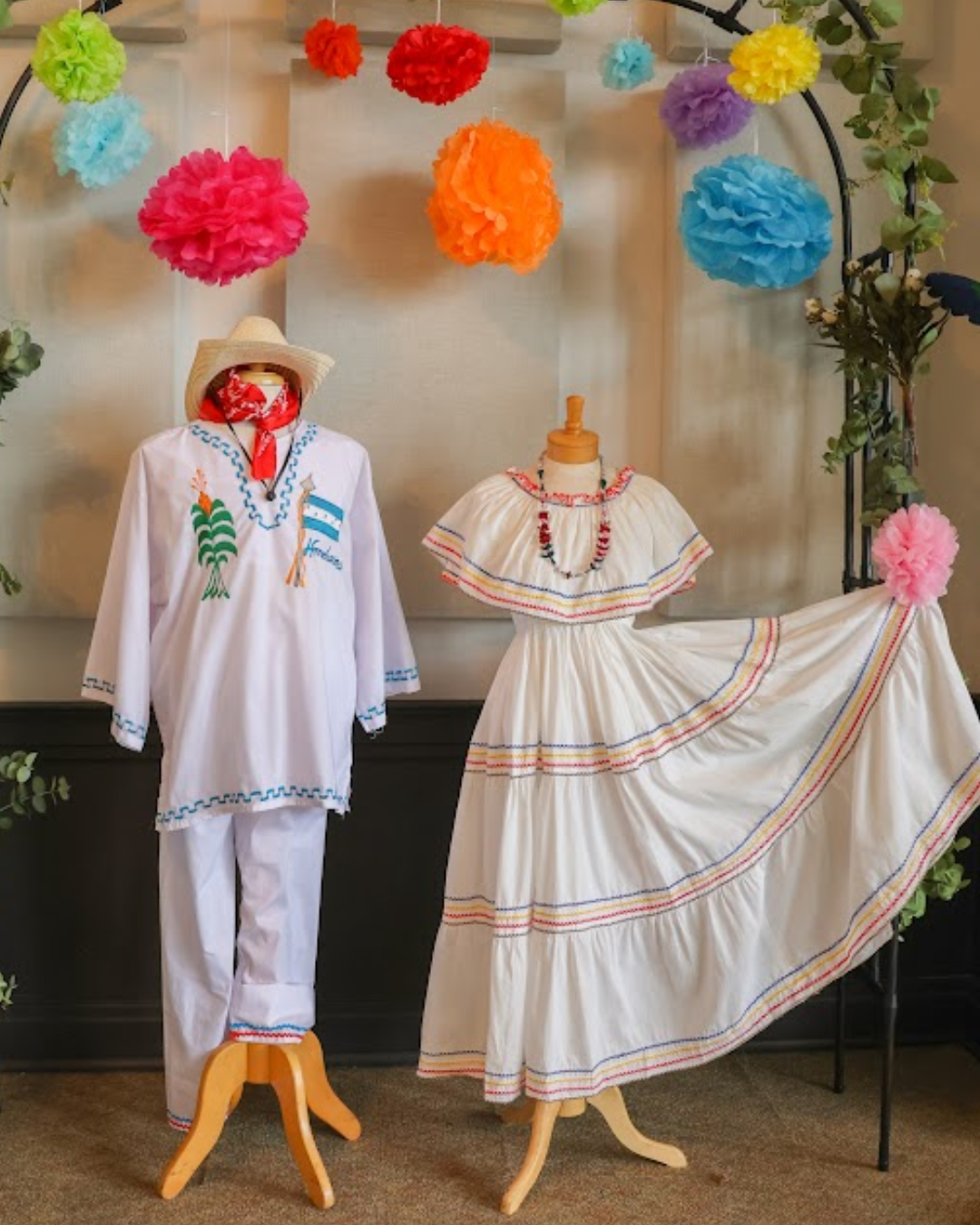
Love, Honduras
A Spotlight On Our Dedicated Volunteers
How Hondurans Live Out The Joy of Democratic Participation