
She went to report the crime, but preliminary police investigators reported the case a suicide and did not take investigation farther. Martha knew her brother, and knew the threats he lived with. She had seen the angle of his prone body, the distance at which the gun had been thrown. This was no suicide. But the only person in the police station who listened to her was Daniel, on whose shoulder she leans now.
Building Hope In Honduras’ Judicial System One Case At A Time
March 15, 2017
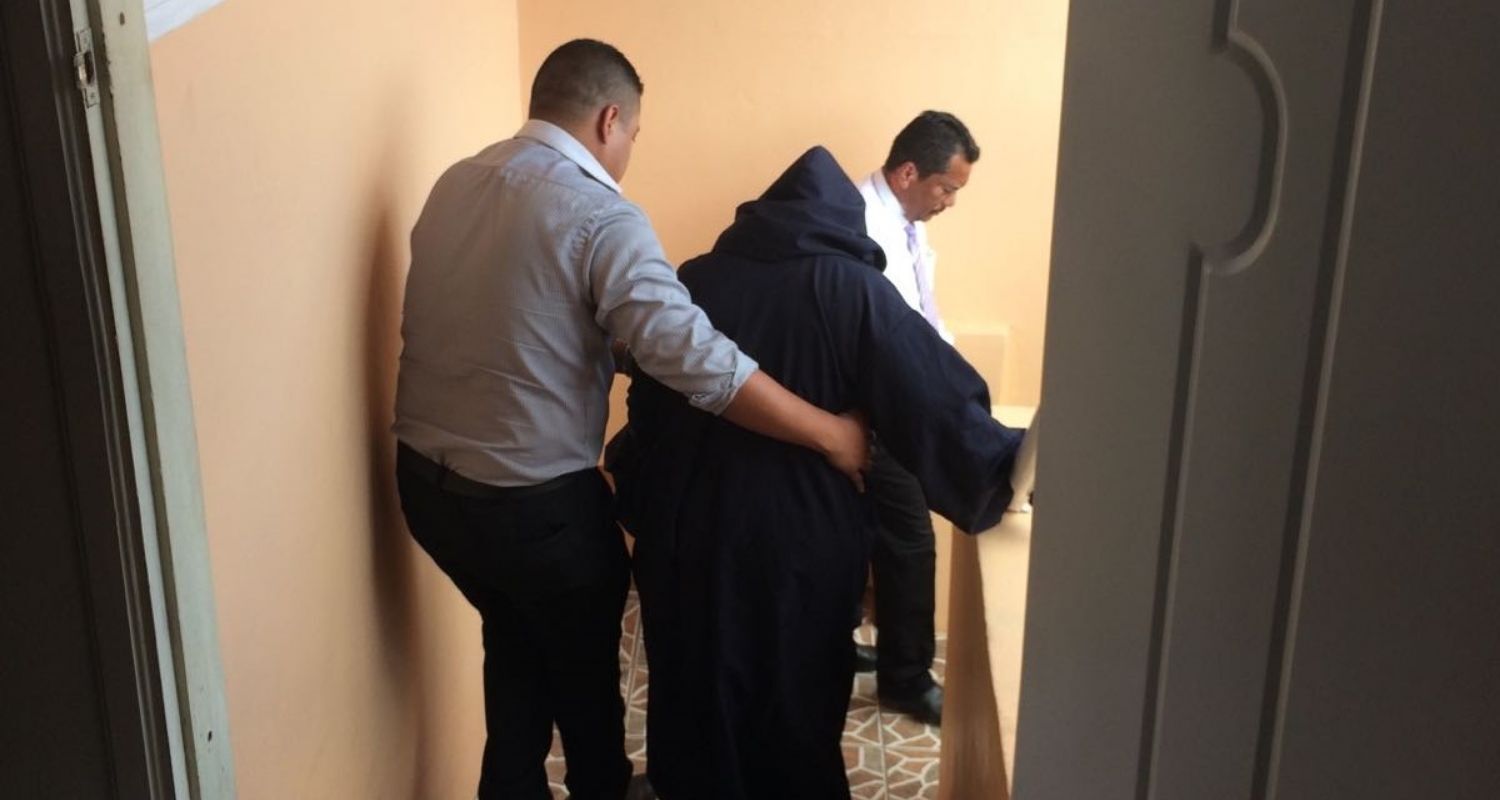
Martha Lopez* climbs the three flights of stairs with the corner of her robe clutched in her hand, barely able to see through the black mesh hood that covers her head. She leans heavily on Daniel*, a criminal investigator whose heavy build would be more intimidating were it not for his kind eyes.
Only once Martha is in the upper room and she hears the door click shut behind her does she dare to pull the covering off of her head, revealing a woman in her early forties with carefully-done makeup around her weary eyes. She looks around at a small group of familiar, smiling faces, her hands still shaking with fear.
Martha’s black robes, head covering, secret visit, and shaking hands – all are part of her life as a protected witnesses, preparing to give testimony in the case of her nephew’s murder.
In a country where impunity is staggering, and where witnesses often have more to fear than criminals, it takes an enormous amount of bravery to be standing in this upper room this morning. It also takes an enormous amount of trust.
Martha lives in one of Honduras’ most dangerous neighborhoods, where gangs scuffle over the right to extort small businesses and gunshots ring out in the night. Martha has lost two family members to this violence. Several years ago, she was the one to force down the door of her brother’s apartment, finding him slumped across the floor, signs of a struggle and a gun on the floor.
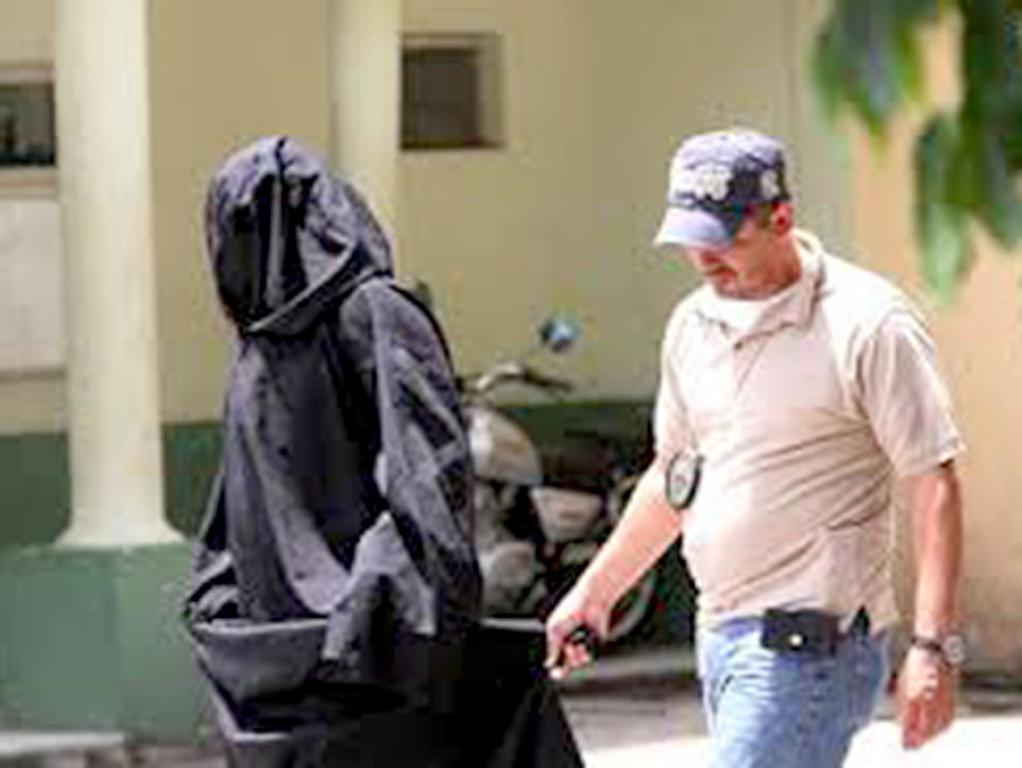
When Daniel met Martha by chance in the police station, he told her first about the psychological counseling that ASJ (formerly known as AJS) offered to families of homicide victims. Then he told her that he and his colleague could help with the investigation and trial of the case.
From that day, Daniel, Julio*, a criminal lawyer, and Elisa*, a psychologist became a regular presence in Martha’s life. Elisa helped Martha process her feelings of guilt and fear. Daniel and Julio worked on demanding an autopsy that would contest the police’s ruling of suicide.
When tragedy struck again, a year later, Daniel was the first person Martha called.
Martha had been in the kitchen when gang members barged into her house looking for her nephew. She had watched her nephew’s hands tremble as he slipped off his necklace and gave it to his brother, then took his phone out of his pocket and gave it to his mother.
She had watched the gang members, who didn’t bother to hide their faces, grab him roughly and take him away.
It was the last she saw of him.
Others saw more.
A neighbor was walking by the soccer field where the group of gang members surrounded the man, raining blows on him for challenging the “war tax” they extorted from local businesses.
Another neighbor saw them push his limp body into a sack, and throw it into the back of a car. Police would find the body the next day, thrown off the side of a steep hill. They would look for witnesses – the murder had occurred at noon in the middle of a busy community – but no one would come forward.
The case didn’t advance until Martha told Daniel, Julio, and Elisa that she would testify. Through her influence, the first neighbor also agreed to testify, but only if the team helped to protect her.
ASJ’s team does everything to keep the witnesses safe. They know through experience that powerful or well-connected individuals seek revenge against people who dare to speak out against them, and that the men who killed Martha’s nephew could have informants in her neighborhood. They know that protecting a witness’ identity is the same as protecting her life.
So ASJ staff work to prepare Martha for her day in court. She begins to casually mention to her neighbors an upcoming trip to visit family. She buys a bus ticket to a distant city – she boards the bus, then gets out secretly just across the city limits, where an ASJ car is waiting for her. In the unmarked car, she dons the dark robes: a hood over her head, gloves over her hands, slippers covering her sandals and red-painted toenails.
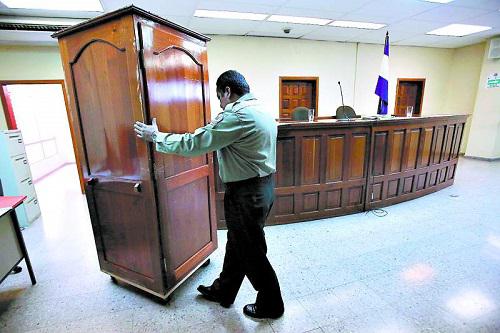
ASJ staff drive her to court where she steps into a wooden box and is wheeled into the courtroom – this way no one can recognize her height or her gait. She lifts her hood for a few seconds so only the judge can see and identify her, then speaks through a special microphone that changes and distorts her voice. Her voice shakes at first, audible even through the distortion, but as she talks she becomes more confident. She remembers Daniel and Julio offering to pray for her during their drive to the court, the tight squeeze of Elisa’s hand as she stepped out of the car.
On the day of the trial, Martha stands in front of the court knowing that she isn’t alone. She finishes her testimony in a full, clear voice – she knows the evidence in the case is strong, that her eyewitness testimony is powerful, that her lawyer is smart and well-prepared.
Justice can win, she dares to believe. For the first time in a long time, she feels a flutter of hope.
Guilty.
In a country where impunity is staggering, and where witnesses often have more to fear than criminals, Martha almost cries to hear the sentences against two of the men responsible for her nephew’s death. Their crime carries a 20 to 30 year sentence. The two men won’t be responsible for the pain and loss of any other mothers, fathers, and aunts.
Daniel, Julio, and Elisa help her back into the car. They’ll stay with her until it’s time to go back to the bus station, time to return to her everyday life. They’ll visit again in a few days, just to check in, and to share advances on the still-ongoing case of her brother.
As case after case in her neighborhood end in conviction, Martha’s fragile hope will take root somewhere inside her. She will begin to believe that a different Honduras is possible, and know that she herself has been part of that transformation.
*Names and some identifying details about this case have been changed.


An ASJ-Honduras Blog by Obed García
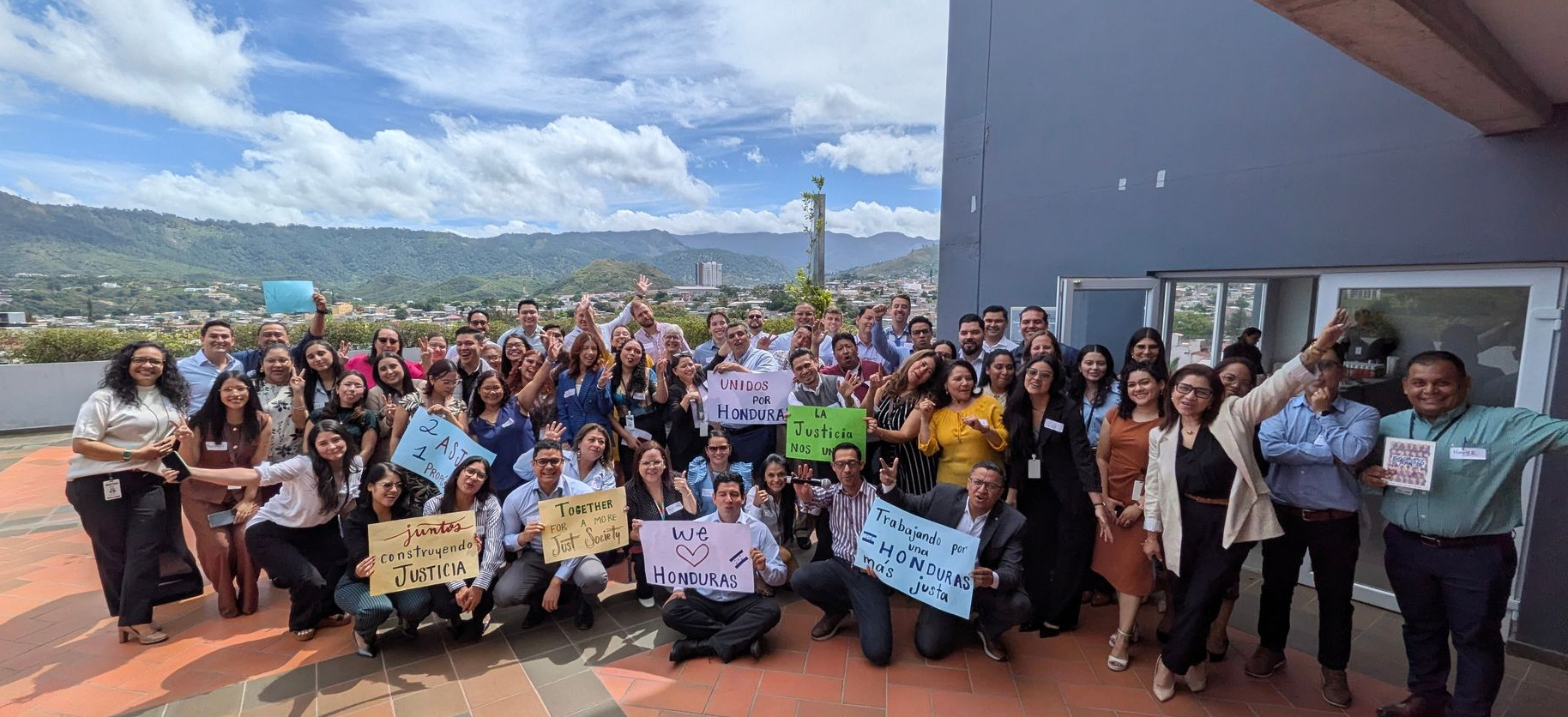
A Time of Connection, Commitment, and Fun!
By Jo Ann Van Engen
By Jo Ann Van Engen
Joy as a starting point for justice work

Joy and Art Merge in a Solemn Ceremony
Love, Honduras
A Spotlight On Our Dedicated Volunteers
How Hondurans Live Out The Joy of Democratic Participation