In D.C., ASJ President And Staff Present Their Progress In Honduran Police Reform

February 27, 2017

On February 19th, the members of Honduras’ Police Reform Commission left for Washington D.C. to share their vision for a new, transformed Honduran police force.


During their five-day trip, Commissioners, including ASJ (formerly known as AJS) staff and board members, met with representatives from the Senate Foreign Relations Committee, the Congressional Central American caucus, and various other representatives from the U.S. Department of State, think tanks, and organizations focused on public security in Latin America.


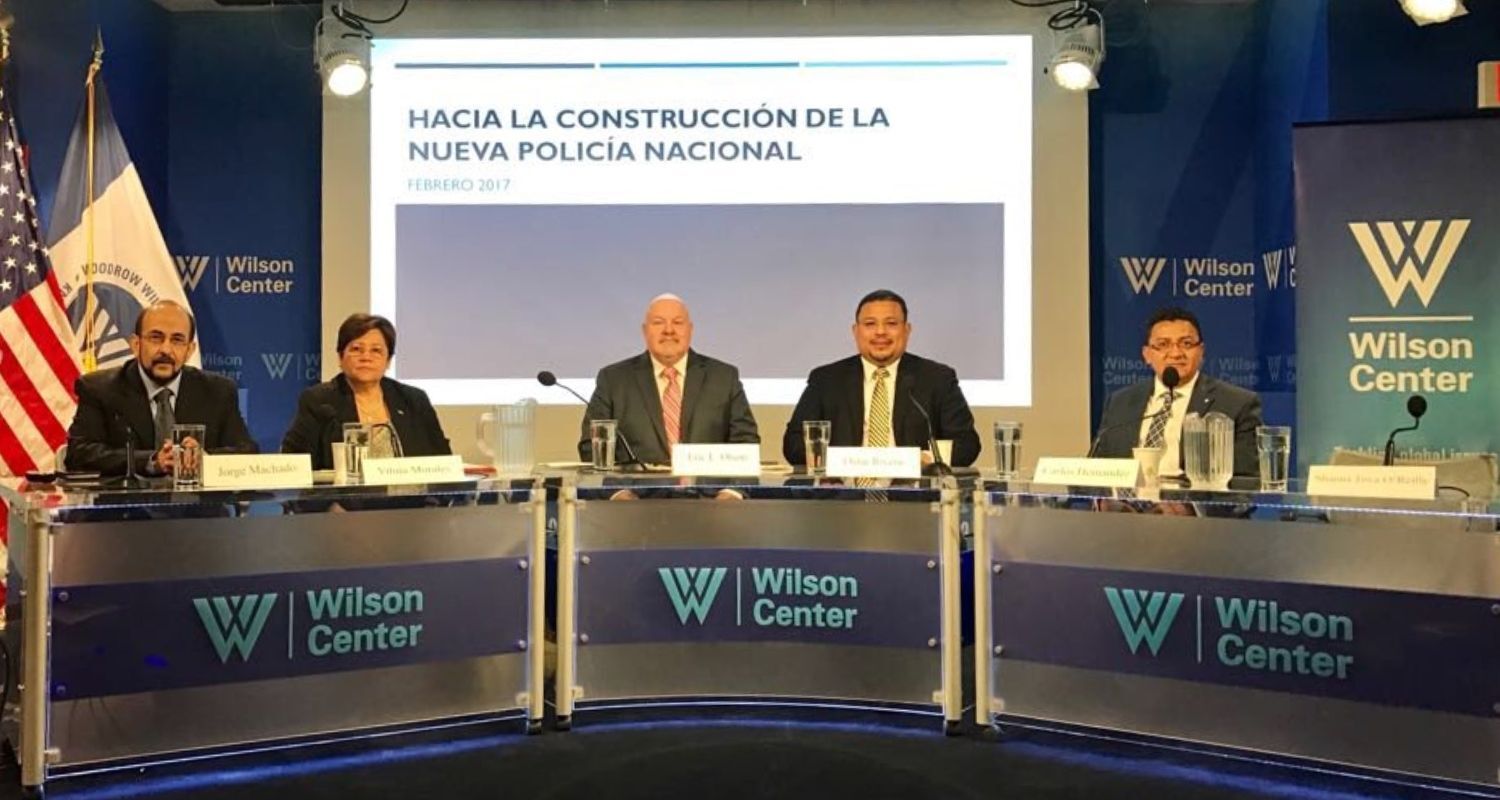
A central part of the trip was a presentation the Commissioners gave at the Wilson Center, where they shared successes and challenges from their ten months working to remove corrupt officers and transform the National Police force.


Over 100 government officers, diplomats, journalists, and members of civil society attended the presentation, presented by the Wilson Center’s Latin American Program. In the presentation, which can be viewed in full here, members of the Commission gave context of Honduras’ difficult past with the National Police. Despite the country’s homicide rate being one of the highest in the world, Honduras currently has just 14,000 police officers, a little more than half the number international experts recommend.


Furthermore, police officers have been involved in many emblematic cases of drug trafficking, extortion, murder, and assassination of public figures, leading to a nation where nearly two-thirds of people distrust the police.


Unlike previous fruitless attempts to change these statistics, however, the Reform Commission’s efforts in the past ten months have seen substantial results.


Police Reform Commission is Seeing Results


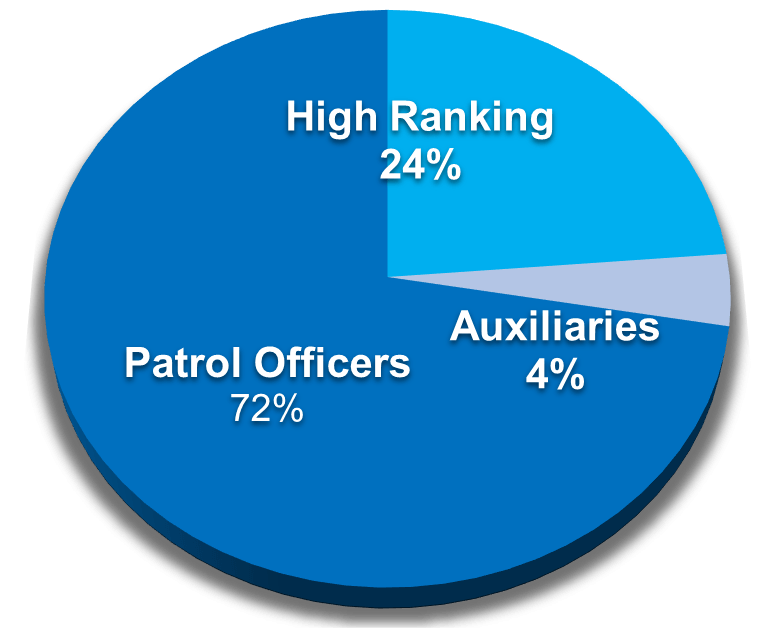
In ten months, the Commission has evaluated 5,867 officers, including all high-ranking officers, and removed 2,959 from their posts – half of all those evaluated.


Among those fired were 17 high-ranking officials and seven police officers with known links to the MS-13 gang, as well as police who had worked as hitmen and assassins. In addition, almost a quarter of those fired were among the very highest-ranking officers.


Corrupt and criminal officers were not the only ones fired, however – the Commission also evaluated whether police were poorly trained or ineffective. “Police affect society, not just by being corrupt, but also when they are incapable, inefficient, and do not have an attitude of service,” said Omar Rivera, ASJ’s director of advocacy and member of the Police Reform Commission.

Transforming the Police with New Officers


Perhaps more encouraging than the firing of 2,959 corrupt or ineffective officers is the hiring of the same number of trustworthy, well-trained officers to replace them. In 2016, 2,577 new officers graduated from revamped police academies, after completing a newly-rigorous application and year-long training process. In 2017, 3,580 more will join their ranks.


The number of Honduran police officers will nearly double in the next five years, Commission members said in their Wilson Center presentation, bringing the force up 26,000 officers, and each officer will go through ongoing vetting and training.

Furthermore, the Commission will make efforts to address lack of leadership and weak institutions – to transform the institution from the inside out.


As the commission finishes with evaluating all 14,000 current officers, they will also evaluate officers due for promotions to ensure that every role is filled not by someone who “put in the time,” but by someone who truly merits it.


Looking out for the Police


The Reform Commission is not only looking to remove bad police and hire new ones – they want to fundamentally change the institution to take care of the officers who are joining the force, as well as those who have remained. For every officer who abused his position to make himself rich, Commission members found, many more officers were struggling at or barely above the poverty line.


Low wages make bribes and payoffs tempting, and also threaten health and well-being. Instead, said Carlos Hernández, president of ASJ, police officers should receive a dignified salary and benefits.


When the officers charged with protecting the country are barely making a living wage, “How can I as a citizen not demand better for them?” Hernández asked.


Well-compensated police officers are only one piece of the Commission’s dream for Honduras. They have laid out other ambitious, but feasible, goals. The Commission would like to see Honduras’ homicide rate continue to drop from 60, to 28 per 100,000. They want to see 50% of homicides investigated completely (in 2015, only 20% were investigated). Finally, they hope for a 50% reduction of incidences of extortion, kidnapping and drug trafficking. Previously, these goals may have seemed impossible, but with radical changes in police enforcement, they seem in reach.


The Responsibility of Everyone


The Commission recognized the difficult trail ahead of them, particularly in empowering the courts to process the hundreds of legal cases that have been brought against corrupt officers.


But “with political will, decisiveness and clarity of objectives, you can achieve a great deal,” said Omar Rivera, “This successful reform can incite other institutions to do the same.”


Hernández saw the last successful months as a chance to “change the story” of what is happening in Honduras, showing that, “where there’s political will and a vigilant civil society, things can change.”


Commission member Jorge Machado reminded the audience that the task rested on the participation not only of the government, but on citizens, organizations, and international support.


“The responsibility to transform and make sure we do not make the same mistakes again is not just a political responsibility,” said Machado, “It is everyone’s responsibility.”
Hondurans cast their ballots during the November 30, 2025, general election, which saw historic vote
By Brian ASJ December 10, 2025
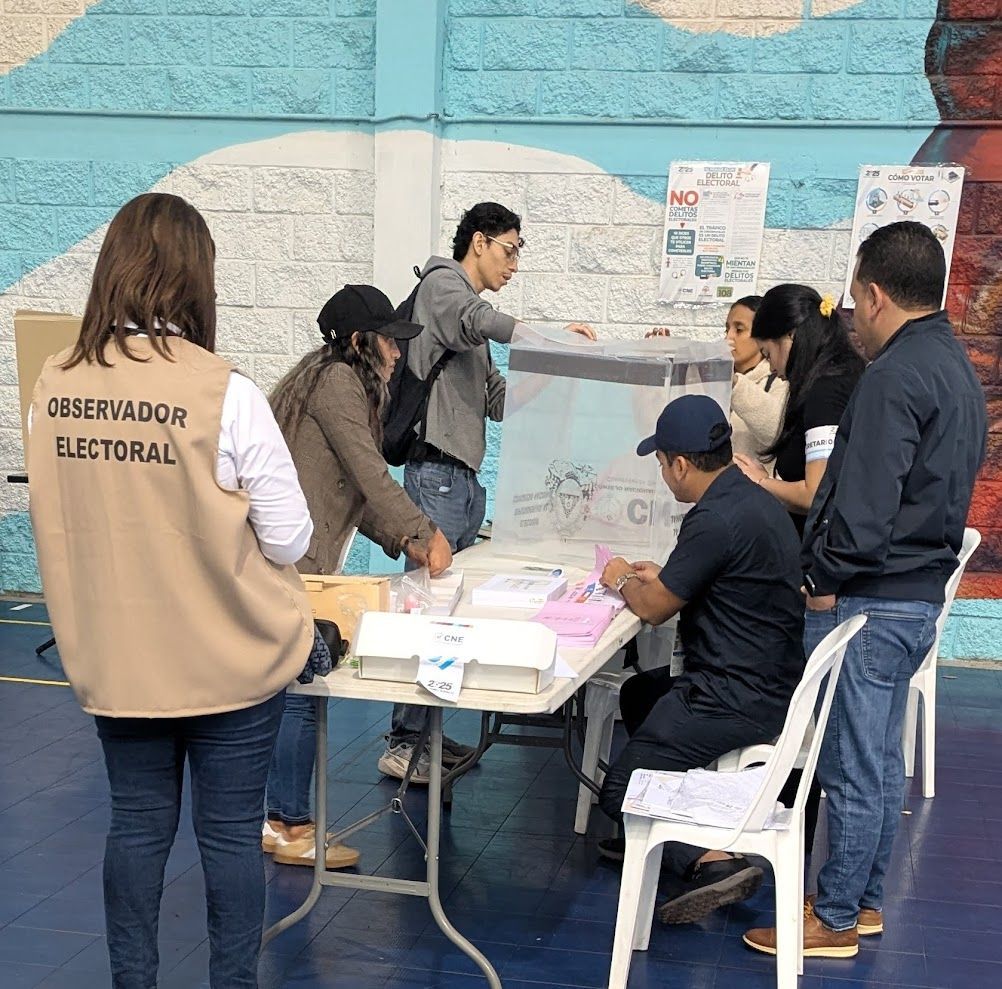
Hondurans cast their ballots during the November 30, 2025, general election, which saw historic voter turnout and a peaceful process supported by more than 12,000 national and international election observers working to safeguard transparency.
December 2, 2025
ASJ-Canada and ASJ-US Congratulate the Honduran People,  Call for Full and Transparent Results As sister organizations committed to justice, peace and hope in Honduras, ASJ-Canada and ASJ-US extend our deepest congratulations to the people of Honduras on the peaceful conduct of their national elections on November 30, 2025. With the initial tally showing an extraordinarily close vote, we call on election authorities to do what is necessary to ensure a transparent count of the remaining ballots in order to guarantee public trust in the final outcome. We commend the Honduran voters for their dedication to democratic participation and their commitment to shaping the future of their country through civic engagement. We also recognize the efforts of electoral authorities, civil society organizations, the international community and the thousands of volunteer observers who worked to ensure a transparent, orderly, and secure process. We are especially proud of our sister organization, ASJ-Honduras, for their unwavering commitment to democracy demonstrated through their electoral observation efforts, their analysis activities, and their consistent call for a fair and orderly process. Now that such a process has been achieved, the work turns to counting the votes with accuracy and transparency. The results remain close, increasing the possibility of a contested result. We support the work of the election officials at the National Electoral Council to give Hondurans confidence in the final results by conducting their count with rigor and transparency. We remain hopeful that the spirit of peaceful participation in the democratic process embraced by the electorate will carry forward into the post-election period to come. We look forward to continued collaboration with ASJ-Honduras as we all work together toward a just and hopeful future for all Hondurans. Matthew Van Geest President, Board of Directors ASJ-Canada Russ Jacobs President, Board of Directors ASJ-US
November 28, 2025
A call to action for Honduras
By Elizabeth Hickel November 25, 2025
The Association for a More Justice Society-US Supports the Network to Defend Democracy; Calls for Free and Fair Elections in Honduras November 25, 2025
November 13, 2025
Honduras’s Institutional Crisis Deepens Ahead of the 2025 Elections
By Elizabeth Hickel November 12, 2025
Dear friend,  I couldn’t stop looking at the picture. Of course, there had been plenty of inspiring photos from this summer’s Prayer Walk for Peace and Democracy. The sea of blue and white rising and falling as hundreds of thousands walked the Honduran hills through Tegucigalpa, flowing like a never-ending stream. Catholic nuns praying their rosaries alongside Pentecostals dancing in the streets. But the picture that still knocks me flat is the closeup. The one of the two men standing side by side (picture enclosed). They are exhausted, and the shorter collapses into the taller. The tears mostly hold joy and relief, but they are mingled with something darker. After all, there had been threats—promises of harm done to themselves and their loved ones if they led their followers through the streets of Honduras in prayer. Despite the fear and intimidation, Pastor Gerardo Irías and Monsignor José Vicente Nácher forged ahead. They knew Honduras needed unity and, above all, prayer before the looming November 2025 presidential elections. As an ASJ supporter, you know that these kinds of threats aren’t out of the ordinary, and your support has helped slow and reverse violence in Honduras. Today, I am writing to share a way you can continue standing with brave Hondurans like Pastor Gerardo and Monsignor José in hope. The Evangelical pastor and the Catholic archbishop put the word out as widely as they could to their churches, hoping to mobilize 20,000 to walk and pray. Instead, an estimated 230,000 walked in the capital of Tegucigalpa alone. It was a historic moment. And without your past support for ASJ, it may have never happened. After all, two years prior, Pastor Gerardo and Monsignor José didn’t even know each other’s names. They first met in 2023 at ASJ’s offices. They were two of many civil society leaders convened by ASJ to discuss safeguarding democracy– especially before the election in 2025. It was at that meeting that they shook each other’s hand and learned each other’s name. It was at that meeting–and many subsequent meetings–where old religious prejudices began to be replaced by trust and mutual affection. So, when the moment came this summer to act, Pastor Gerardo and Monsignor José knew what they had to do. And they knew that they had to do it together.
November 11, 2025
Calvin alums turn faith into action through nonprofit
October 13, 2025
MESSAGE FROM THE EXECUTIVE DIRECTOR
September 10, 2025
Thank You for Moving Forward With Us this Summer!
September 8, 2025
When Policies Shift, Families Pay the Price * by Jo Ann Van Engen
Show More