
October 27, 2016
In Honduras, violent crimes often go unreported because of fear of retaliation, because of a lack of trust in the judicial system, but also because the system is complicated, intimidating, and difficult to understand. Security 101 teaches leaders of civil society both how to reduce their risks for crime and what to do if crimes do happen. They are taught to navigate the current judicial system, but also to observe it and mobilize people to pressure the government to be more effective.
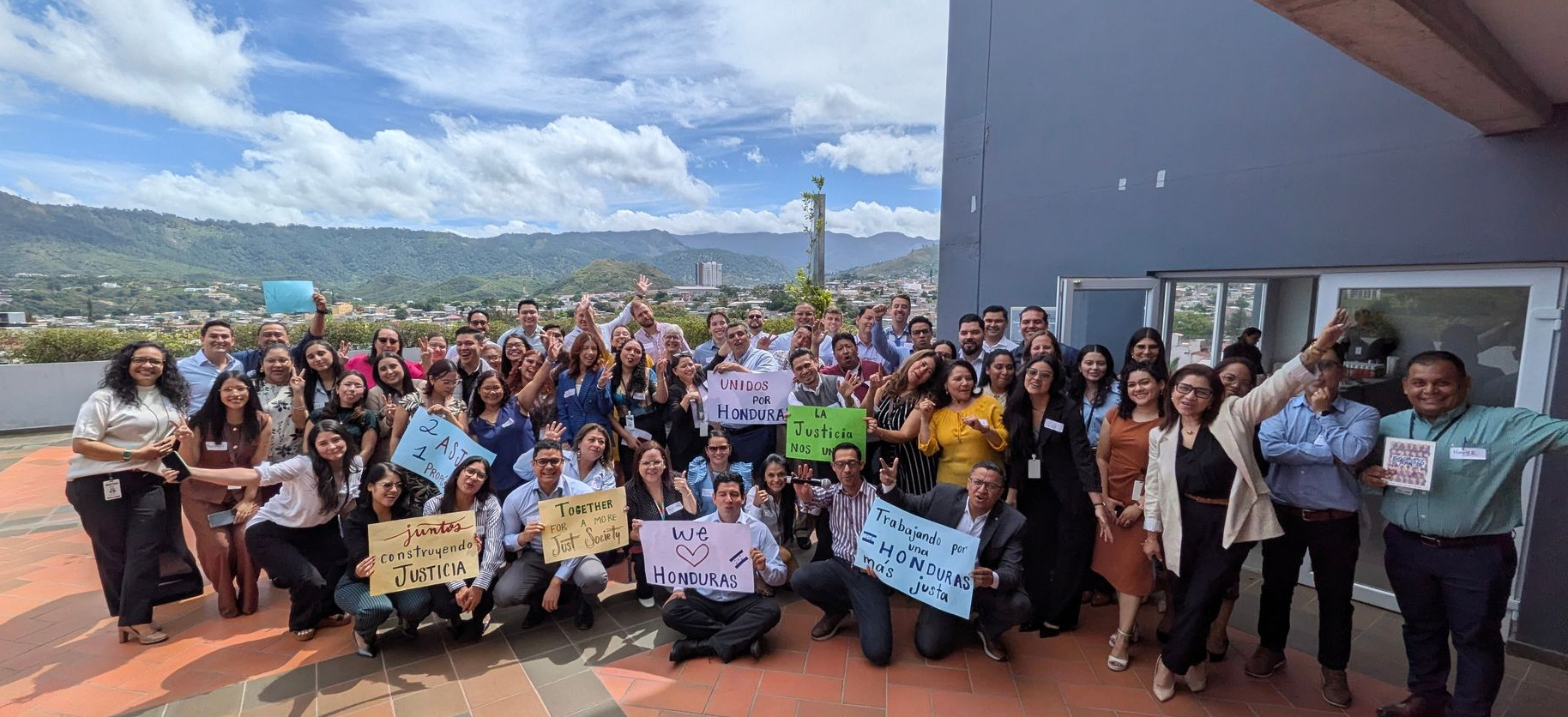
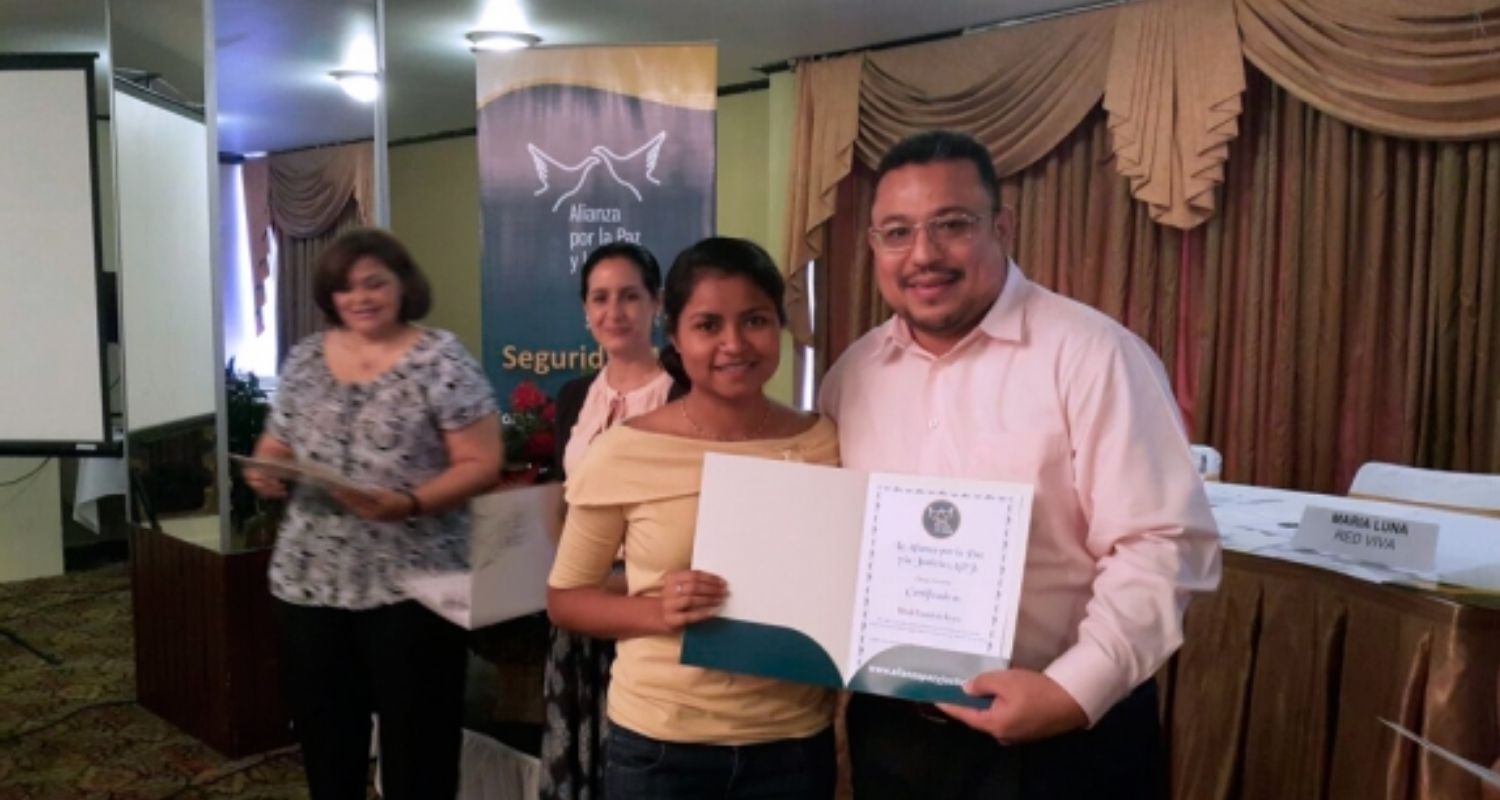
The room hums with the chatter of attendees. It’s the last day of the five-session Security 101 training, and people are huddled in groups sharing stories and offering ideas.
Representatives from youth and women’s coalitions, unions, think tanks, and nonprofit organizations talk together familiarly – it’s the third weekend they’ve spent together in San Pedro Sula, learning about the Honduran justice system and how to keep themselves and their neighborhoods safe.
These trainings are part of ASJ’s (formerly known as AJS) plan to reduce violence and reform Honduras’ judicial systems by empowering civil society. Through the civil society coalition Alliance for Peace and Justice (APJ), ASJ has already graduated four Security 101 classes, reaching 250 people, and has plans to host even more sessions in different regions of Honduras.
The training’s five modules are designed to demystify the complicated systems of crime and punishment and equip civil society with the tools they need to share with their own networks – spreading knowledge about rights and empowerment throughout Honduras.
APJ members represent nonprofits, academic institutions, and churches, and understand the power of citizens to transform systems and make a safer society.
It’s desperately needed work.
In Latin America, one in ten people has either been the victim of a violent crime or have had a close family member suffer one in the last year. This number is even higher in Honduras, where nearly everyone in the room can share stories of how assault or murder has touched their own lives.
These violent crimes often go unreported because of fear of retaliation, because of a lack of trust in the judicial system, but also because the system is complicated, intimidating, and difficult to understand.
Security 101 teaches leaders of civil society both how to reduce their risks for crime and what to do if crimes do happen. They are taught to navigate the current judicial system, but also to observe it and mobilize people to pressure the government to be more effective.
“This knowledge is so important,” said Keisy Rodriguez, a volunteer with Amigos sin Fronteras (Friends without Borders), an organization that does preventative education with some of the most marginalized youth in San Pedro Sula’s roughest neighborhoods.
The Security 101 trainings directly helped her in at least one situation. She shared a story about two young people who were in a feud over money that one had stolen from another. “They were going to resolve it like they usually do, challenge each other to a fight, and kill each other.”
Instead, Keisy said, “We went to the police station nearby and made a report as APJ taught us. They helped resolve the conflict and now the boys are friends again.”
Cases don’t always end this positively. Due to a history of corruption and mismanagement, Hondurans have very little trust in the police and judicial system. According to a National Public opinion poll, only half of the Honduran population reported trusting Honduras’ military police, and only 36% trusted the national police.
As ASJ works simultaneously teaching people like Keisy how systems should work and working with the police and judicial systems to make sure they do work, they hope that more success stories will build up a culture of trust in public systems that will fight against the current state of impunity in Honduras.
The coalition APJ also monitors the Honduran Justice and Security sectors, doing in-depth studies into the effectiveness and efficiency of the systems and offering recommendations for improvement. This is information that goes straight to the sectors’ ministers but is also shared with the general public.
As the Security 101 participants finished their conversations together, Carlos Hernández, president of ASJ, and Omar Rivera, coordinator of APJ, along with other members of APJ, presented a panel discussing APJ’s recent findings in the judicial system.
“In Honduras, just 4% of violent deaths obtain justice through a condemnatory sentence,” said Omar Rivera, before explaining reasons why that is – case backlogs, lack of investigators, lack of protection for witnesses, “If one of the components of the system of justice fails, the whole thing will fail.”
Hernández and Rivera are familiar faces on television, both frequently consulted as experts in civil society and public transparency. The training attendees sat and listened attentively, hearing about the justice systems’ steps in the right direction, but also about weaknesses that still existed in the system designed to protect them.
“The more money you have, the more political influence,” Rivera continued. “For the most vulnerable in Honduras, you go in front of the judge and you know that because of your connections you’re not going to receive justice.”
This struck a nerve with participants.
“They have killed lawyers, businessmen, congressmen, journalists – where was the justice system?” one audience member asked, “Many of my coworkers have had family members killed. When we have achieved justice, we have achieved it on our own resources.”
Together, the participants talked about what it would look like to live in a country where the judicial system truly responded to citizens’ needs. Then they began to discuss what it would take to get there.
“You are now citizens who know both your rights and your power,” said Suyapa Castro, local coordinator of APJ in San Pedro Sula. “Remember that this is your house, this is your land, your home, and you have to fight for her.
The participants took on the charge. “I learned my rights here,” Keisy said, “I learned about our role as citizens, how we can intervene, and how can we have a voice. People ought to know that our opinions and our actions as a population matter.”
“This training helped us to be citizens involved in oversight and advocacy,” said a representative from the Organizacion para la Capacitación de Juventud (Youth Training Organization), “Not just as observers, not just as participants, but as leaders.”