A Million Dollars To Build A Road That’s Still Dusty And Potholed

January 22, 2010

In December 2009, journalists with Revistazo.com set out to track down the final destination of millions of dollars of government funds that Honduras’ members of Congress spend on pet projects each year, with little oversight or accountability. While they were not always able to determine the final destination, they did find out that a lot of funds weren’t spent on the projects they had ostensibly been provided for. Other funds were spent for the designated purposes but were only sufficient to partially complete infrastructure projects that, without further investment, are useless and will soon deteriorate. The following is a translation of this article written by Revistazo journalist Claudia Nieto, based on her investigation of a million-dollar highway project that seems to have ended in nothing more than mud and dust.

The construction of 12 kilometers of road in Nacaome has been a dream for the inhabitants of the four communities it would run through. In 2006, the Honduran Congress designated 20 million lempiras (1 million dollars) to then Congressional representative, José Alfredo Saavedra, (who from July – December 2009 served as President of Congress). Residents were thrilled beyond measure. But the highway was never built and the money disappeared—and no one has been accused of corruption.


Seventy-year-old María Canales has lived all her life in Altos del Estiquirín. Her small village lies along the route that joins the communities of Rosario, Tamarindo, and Tular. She built her house slowly from the money she earned growing corn and other grains. For Maria and her family, the 12-kilometer road linking them to the outside world was their hope for a better future.

Santos Molina lives in an adobe house he built bit by bit, “with the little I earned, although sometimes we went without.” Santos was tired of watching his children breathing in dust and hoped that improving the road would make it useable during the rainy season when it turned into a muddy quagmire.

But María and Santos eventually realized that the road was no more than a pipedream. Only a small portion of the million dollars was ever used to improve the road.


Who is responsible for this situation?

The Ministry of Finance, the incompetence of the supervisor of Public Works, Transport, and Housing–SOPTRAVI, along with a lack of transparency, supervision, and accounting in the use of the funds.


A construction project left unfinished

In 2006, under Legislative decree Nº 80–2006, the Honduran Congress made out two checks for the amount of 10 million lempiras each, in the name of SOPTRAVI, in order to begin construction of the road in Nacaome. According to information provided by SOPTRAVI, the project was not bid by construction contractors until 2007. At the end of 2008, the construction company Constructora Marve S. de R.L. together with ES Constructores S.A. de C.V., began construction of the 12 kilometers of road, only to halt construction in May of 2009.


The road turns into Public Enemy #1 for the local population

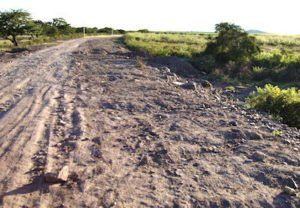
Revistazo.com, in a visit to the area around the unfinished road, reported a dirty and intransitive expanse of dirt, rocks, and dust. As the base of the road became rutted, drivers were forced to fill the ruts with material they removed from other areas of the road. Neighbors say that work on the road began in May of 2008, which happens to coincide exactly with the rainy season in this part of Honduras. In a short time, the piles of dust and dirt left abandoned by the tractors turned into muddy channels which continually flowed into the homes nearest the road. Santos actually lost one home after the mud damaged it badly enough to leave it uninhabitable and for María, leaving her home in rainy season is an odyssey.


Road work paralyzed because Finance didn’t give all the money to SOPTRAVI Revistazo.com consulted María Judith Gómez, civil engineer and coordinator of the SOPTRAVI Project. Gómez explained in a few words that the project was discontinued because the Ministry of Finance did not give the necessary funds to pay the construction companies. When asked if these types of projects are given sufficient supervision, Gomez answered succinctly, “No.”


Who requested funds from Congress and then failed to supervise this Project?

The three congressional representatives from Valle are Alfredo Saavedra, Ana Julia García Villalobos, Ersy Mejía y Eleazar Juárez. According to the Democracy without Borders Foundation in their legislative productivity report for 2008, it was Saavedra who requested the 20 million lempiras to build the road.


“Public Works” by congressional representatives with no supervision.

Martha Sabillón, the legal representative of Democracy without Borders (FDsF), explains that partisanship in the distribution of the subsidies fund is not the only problem. A bigger problem is that these funds are neither supervised nor audited. “This is the biggest weakness of this system—that although the law requires financial reports be filed with the Secretary of Finance as well as an audit by the General Accounting Office, in fact, neither of these processes are carried out.”


Sabillón explains that the only financial control managed by Congress is an informal expense report after that project is carried out. Congressional representatives can present receipts and once those are filed, they can ask for a subsequent subsidy to carry on with a project.


Guillermo Casco Callejas, legal representative for the Organization of Private Development Organizations in Honduras, (FOPRIDEH) also believes the lack of reporting is a serious problem in Congress, but he believes it is not just the lack of financial reports but also the lack of accountability regarding the quality of the projects carried out.


Perhaps María y Santos will live out the rest of their days amidst the dust and mud of a road that was used as the hook to get a million dollars by those who are not made accountable. It could be said that a million dollars is not much to build 12 kilometers of road, or that the political crisis of the last year that paralyzed Honduras and left a myriad of unfinished projects and frozen funds has something to do with the uncompleted road. But, is there any excuse that justifies beginning, two years late, a Project that was authorized in 2006? Must the poorest Hondurans pay for this delay?
December 2, 2025
ASJ-Canada and ASJ-US Congratulate the Honduran People,  Call for Full and Transparent Results As sister organizations committed to justice, peace and hope in Honduras, ASJ-Canada and ASJ-US extend our deepest congratulations to the people of Honduras on the peaceful conduct of their national elections on November 30, 2025. With the initial tally showing an extraordinarily close vote, we call on election authorities to do what is necessary to ensure a transparent count of the remaining ballots in order to guarantee public trust in the final outcome. We commend the Honduran voters for their dedication to democratic participation and their commitment to shaping the future of their country through civic engagement. We also recognize the efforts of electoral authorities, civil society organizations, the international community and the thousands of volunteer observers who worked to ensure a transparent, orderly, and secure process. We are especially proud of our sister organization, ASJ-Honduras, for their unwavering commitment to democracy demonstrated through their electoral observation efforts, their analysis activities, and their consistent call for a fair and orderly process. Now that such a process has been achieved, the work turns to counting the votes with accuracy and transparency. The results remain close, increasing the possibility of a contested result. We support the work of the election officials at the National Electoral Council to give Hondurans confidence in the final results by conducting their count with rigor and transparency. We remain hopeful that the spirit of peaceful participation in the democratic process embraced by the electorate will carry forward into the post-election period to come. We look forward to continued collaboration with ASJ-Honduras as we all work together toward a just and hopeful future for all Hondurans. Matthew Van Geest President, Board of Directors ASJ-Canada Russ Jacobs President, Board of Directors ASJ-US
November 28, 2025
A call to action for Honduras
By Elizabeth Hickel November 25, 2025
The Association for a More Justice Society-US Supports the Network to Defend Democracy; Calls for Free and Fair Elections in Honduras November 25, 2025
November 13, 2025
Honduras’s Institutional Crisis Deepens Ahead of the 2025 Elections
By Elizabeth Hickel November 12, 2025
Dear friend,  I couldn’t stop looking at the picture. Of course, there had been plenty of inspiring photos from this summer’s Prayer Walk for Peace and Democracy. The sea of blue and white rising and falling as hundreds of thousands walked the Honduran hills through Tegucigalpa, flowing like a never-ending stream. Catholic nuns praying their rosaries alongside Pentecostals dancing in the streets. But the picture that still knocks me flat is the closeup. The one of the two men standing side by side (picture enclosed). They are exhausted, and the shorter collapses into the taller. The tears mostly hold joy and relief, but they are mingled with something darker. After all, there had been threats—promises of harm done to themselves and their loved ones if they led their followers through the streets of Honduras in prayer. Despite the fear and intimidation, Pastor Gerardo Irías and Monsignor José Vicente Nácher forged ahead. They knew Honduras needed unity and, above all, prayer before the looming November 2025 presidential elections. As an ASJ supporter, you know that these kinds of threats aren’t out of the ordinary, and your support has helped slow and reverse violence in Honduras. Today, I am writing to share a way you can continue standing with brave Hondurans like Pastor Gerardo and Monsignor José in hope. The Evangelical pastor and the Catholic archbishop put the word out as widely as they could to their churches, hoping to mobilize 20,000 to walk and pray. Instead, an estimated 230,000 walked in the capital of Tegucigalpa alone. It was a historic moment. And without your past support for ASJ, it may have never happened. After all, two years prior, Pastor Gerardo and Monsignor José didn’t even know each other’s names. They first met in 2023 at ASJ’s offices. They were two of many civil society leaders convened by ASJ to discuss safeguarding democracy– especially before the election in 2025. It was at that meeting that they shook each other’s hand and learned each other’s name. It was at that meeting–and many subsequent meetings–where old religious prejudices began to be replaced by trust and mutual affection. So, when the moment came this summer to act, Pastor Gerardo and Monsignor José knew what they had to do. And they knew that they had to do it together.
November 11, 2025
Calvin alums turn faith into action through nonprofit
October 13, 2025
MESSAGE FROM THE EXECUTIVE DIRECTOR
September 10, 2025
Thank You for Moving Forward With Us this Summer!
September 8, 2025
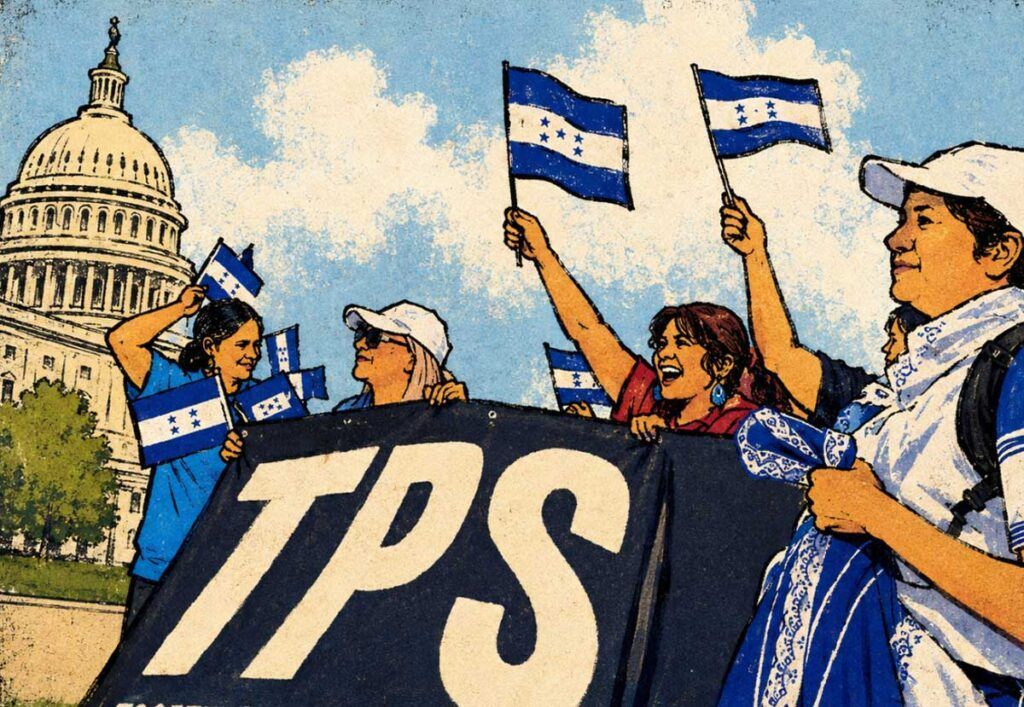
When Policies Shift, Families Pay the Price * by Jo Ann Van Engen
September 2, 2025
Inspiring civil society in the US with a vision of a more just society
Show More