An electric utility should fuel national growth.
Over the last decades in Honduras, the opposite has happened. Instead of powering development, the
Empresa Nacional de Energía Eléctrica
(ENEE) has drained public funds that belonged in hospitals and schools—pulled down by its own inefficiency and chronic electricity losses. Over the past four months, through
Potencia Honduras and the
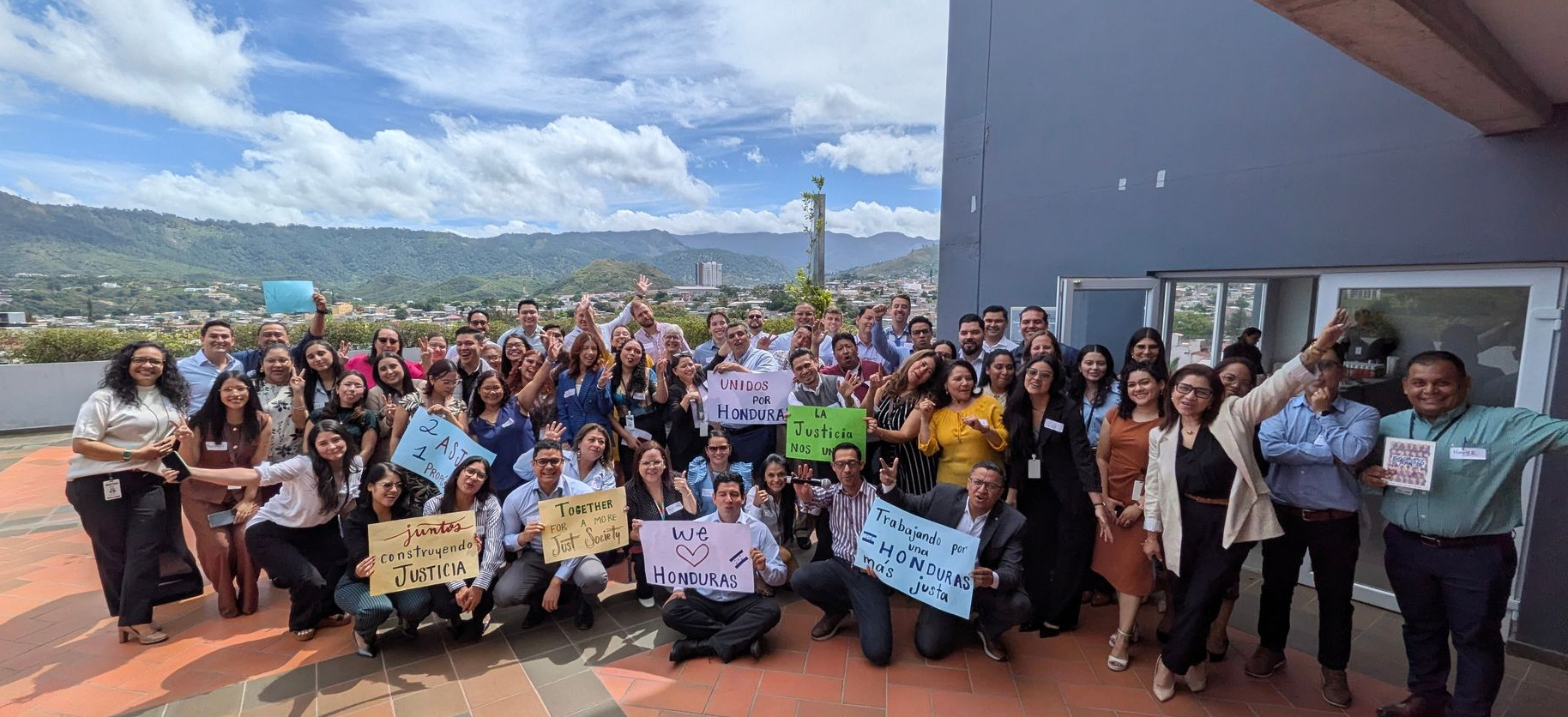
Asociación para una Sociedad más Justa (ASJ), I have been fortunate to help push for change.
Last week, Honduras's Congress approved a comprehensive reform that restructures the state utility to make it more efficient and accountable. It also reorganizes the market so that users have real options and the rules are clear enough to attract the investment the country needs. We were able to provide technical inputs for the law, and, just as importantly, to help build the political pressure a reform like this requires. The second part marked me, and I'll come back to it in another post as I learned that even the best technical idea stays on a desk without political force behind it.
What the law does.
It unbundles the ENEE into separate generation, transmission, and distribution companies under a public holding, with a mandate that each company's bylaws insulate day-to-day management from political interference. It creates an independent System and Market Operator (OSM) to run the market transparently and dispatch generation at least cost. Honduras has had a wholesale spot market on paper for a decade, but in recent years its operation was captured by the ENEE, eroding credibility and undermining the trust investors need to finance new power generation. The law also strengthens the regulator's independence, commissioners at the
Comisión Reguladora de Energía Eléctrica
(CREE) will serve staggered terms, desynchronized from the presidential cycle, so that no single administration appoints the entire commission. And it opens the market as commercial and industrial users, the engines of employment, will be able to contract their power through qualified suppliers (comercializadores) instead of depending on a single company that has failed them before. Private capital is also explicitly allowed into transmission expansion, unlocking investment the public purse cannot finance on its own.
The scale of the challenge.
Honduras's own indicative plans show what is at stake this decade, from 2026 to 2035. The generation plan calls for roughly
3,300 MW of new capacity at a cost of about US$3.7 billion.
That is nearly double the entire fleet the country has built in its history, which stands at about 3,400 MW installed today. The need is urgent, because without those additions firm capacity unravels. In 2029 alone, 886 MW of plants retire, and
by 2035 the firm-capacity deficit reaches 2,031 MW, around 70% of peak demand. Yet only 119 MW of new capacity is committed so far. Transmission compounds the challenge. Its expansion plan requires about
US$899 million for roughly
1,195 km of new lines and 37 new substations. A few of those substations would be the first ever in Intibucá, La Paz, and Ocotepeque, three largely rural departments with none today. Together, the sector must mobilize close to US$4.6 billion
this decade. That is far beyond what the state can carry alone, and it is unattainable without transparent rules and open private participation.
Navigating what Congress added.
In the legislative debate, several short-term relief measures were folded in that don't directly serve the goal of a restructured company and a clearer market, such as a six-month tariff freeze and debt amnesties for some residential users and municipalities. To not affect the balance sheets of the new operating companies, the government will need to identify the fiscal resources to cover them. They should be transparent, monitorable, temporary, targeted strictly to those in real need, and eventually transitioned into an explicit subsidy policy led by the Energy Ministry. Congress also added rigidities that could push up purchase prices. Power purchase agreements now carry a minimum 10-year tenor, reducing contracting flexibility, and contracts emerging from competitive international tenders must still return to Congress for approval, an extra layer of political risk that bidders may price into their offers. The strengthened institutions and the new distribution company will have to manage these processes strategically, so that competition and investment are fostered without raising final prices.
The road ahead.
Approving the law was an indispensable milestone, but a law is only as good as its execution. To move it from paper to results, the law creates a Steering Committee (Comité de Conducción), coordinated by the Ministry of the Presidency and including the ministries of Energy and Finance, the ENEE, and the regulator (CREE). It is supported by an implementation Technical Unit (Unidad Técnica). Both bodies were among
Potencia Honduras's contributions to the law, meant to guarantee coordination, technical continuity, and accountability through the transition.
The statutory clock is already running. The regulations governing the Comité de Conducción and
Unidad Técnica are due within 45 business days, followed by corporate bylaws for the unbundled subsidiaries within 120 days. From there, the OSM must be fully operational within about 140 business days, and the first competitive supply tenders must launch within 180 days. Meeting those dates will take capable, coordinated leadership and a financial overhaul to stand up the new companies.
The next 12 to 18 months will determine whether this reform stays on paper or starts to reshape the sector into one that finally stops draining the treasury and delivers the reliable, affordable power Hondurans deserve and the economy needs to grow.
The direction is right; the execution is everything.