Luis Makes His Voice Heard

October 28, 2015

A man, desperate for answers, dressed up like one of the Honduran President’s bodyguards to get close enough to him hand him a letter. Luis Enrique who is a member of a citizen land-rights committee supported by the Association for a More Just Society (ASJ), wanted answers about his land.


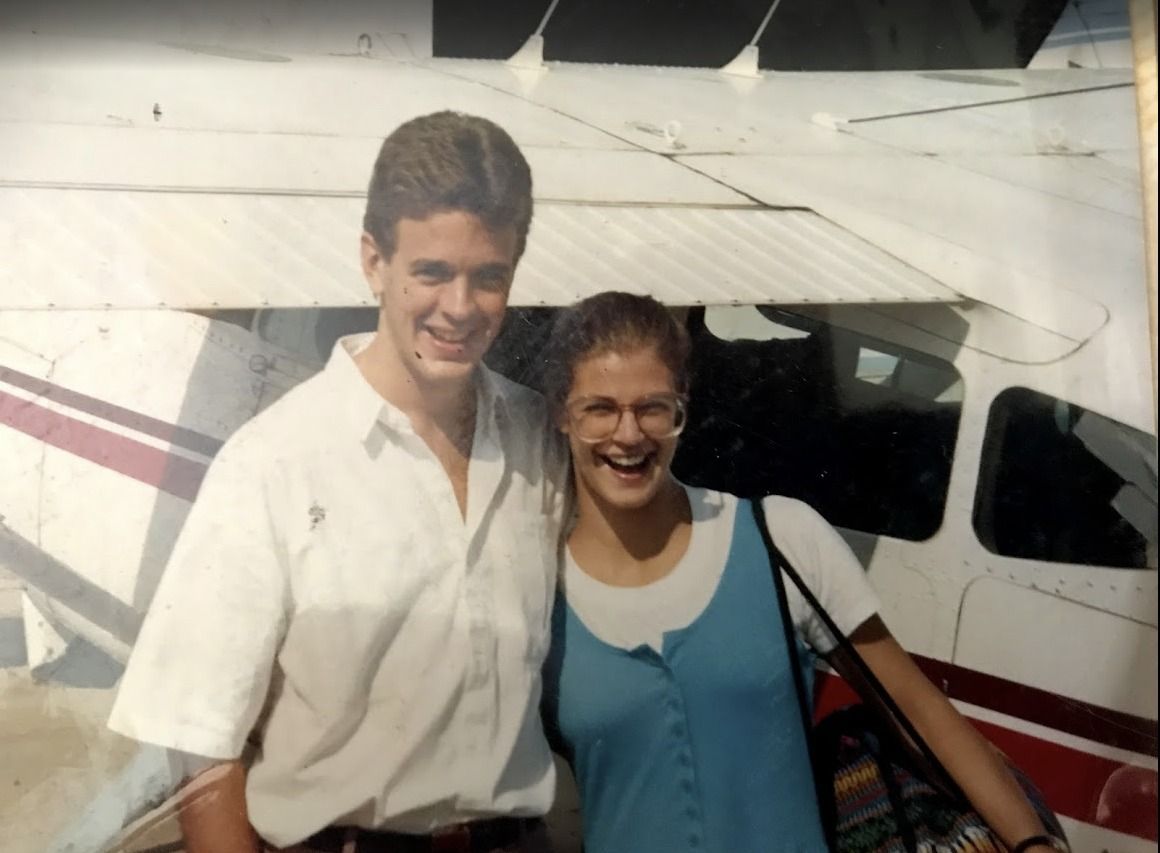
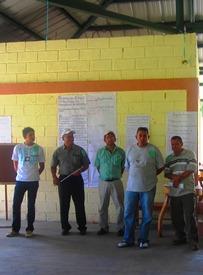
In the early 2000s, Luis (second from right in photo), along with his wife and daughter and some neighbors had moved onto an open field. They didn’t pay for the land because no landowner stepped forward.


For decades, other Hondurans had started neighborhoods in a similar fashion, on deserted fields and mountainsides across the country. But in many cases, once roads had been cleared and houses built, a businessman, politician, or lawyer—often, in fact, two or three of them—would show up with competing claims to being the owners of the mountainside or field. Residents felt confused about who the real owner was, and frightened that they’d be run off their land.

To address such problems, in 2004 the Honduran Congress, aided by a team of ASJ lawyers, drafted a new law allowing the government to take over (or to use the legal term, “expropriate”) neighborhoods where multiple people had filed conflicting ownership claims. Once expropriated, residents can pay into a trust fund overseen by the government and receive indisputably valid land titles. Competing claims to ownership of the once-bare, now-populated field or mountainside are sorted out in court, and if any are found to be legitimate, the owners are compensated for their loss with money the current residents paid into the trust fund.


A title provides emotional and financial security for poor Honduran homeowners. With a title, they know that no one can take their land away from them, because they have legal proof of ownership. Land is often a poor family’s most valuable asset; a title “unlocks” this asset, allowing it to be used as collateral on a loan to start a small business or to do home improvements.


In 2005, Luis Enrique was excited. The government had just expropriated his neighborhood, Villa Linda—titles were sure to follow soon. But things quickly went sour. In an election-season rush, the government expropriated scores of neighborhoods without doing the requisite research beforehand. In Luis Enrique’s community, there were not competing claims to ownership—just one legitimate owner, a bank called Banhprovi, which had already proven that Luis Enrique and his neighbors had moved onto its land without permission. Now the bank wanted them to pay it directly, instead of going through the roundabout trust-fund process. The courts sided with the bank, leaving the neighborhood in a legal catch-22.


The new law didn’t provide any way for neighborhood residents to appeal court decisions, but it did stipulate that neighborhood residents could not start any other land ownership process, for example, by paying the owner directly, since the neighborhood had already been taken over by the government. As ASJ Land Rights educator Anajansi puts it, “The community was completely paralyzed.”


The ASJ Land Rights team had already been working with Luis Enrique’s neighborhood, and 9 others with the same problem, since the government had taken over their land, training groups of citizens in “Land Rights Committees” to advocate for their communities as they work towards land ownership. Josie, a lawyer on the team, also accompanied neighborhood members to meetings with government officials and helped them to read complicated legal documents about their situation.


In addition, the plight of these neighborhoods was one of ten points for change that the Land Rights team repeatedly pushed with officials at the Property Institute (the government agency overseeing land titling). As Josie says, “Whenever we would have a meeting, we asked what was happening with these neighborhoods and how the Property Institute was going to respond. We kept reminding them that these neighborhoods had nowhere to turn.”


In February 2012, as if in answer to Luis’ letter, and the team’s pressure, the President issued a decree that overrules the court orders that had brought the titling process to a standstill in Luis’ neighborhood and 9 others; the bank would still get paid, it would just have to go through the process outlined in the law. Josie stresses how important this decree is, saying, “They’ll have legal security for their land. Now they’ll be able to get a title when before they were hopeless.”


It would have been nearly impossible for the communities to advocate for themselves, says Josie, without the support of the Land Rights team. “They have to wade through so much legal jargon and visit so many government offices, it would have been difficult for them to understand their situation on their own,” she says.


But, with the support of the Land Rights staff people like Luis Enrique were able to make their voices heard so that he, along with 160 other families in his neighborhood, and residents of 9 other neighborhoods will be able to obtain their land titles and the security that they provide.
Hondurans cast their ballots during the November 30, 2025, general election, which saw historic vote
By Brian ASJ December 10, 2025
Hondurans cast their ballots during the November 30, 2025, general election, which saw historic voter turnout and a peaceful process supported by more than 12,000 national and international election observers working to safeguard transparency.
December 2, 2025
ASJ-Canada and ASJ-US Congratulate the Honduran People,  Call for Full and Transparent Results As sister organizations committed to justice, peace and hope in Honduras, ASJ-Canada and ASJ-US extend our deepest congratulations to the people of Honduras on the peaceful conduct of their national elections on November 30, 2025. With the initial tally showing an extraordinarily close vote, we call on election authorities to do what is necessary to ensure a transparent count of the remaining ballots in order to guarantee public trust in the final outcome. We commend the Honduran voters for their dedication to democratic participation and their commitment to shaping the future of their country through civic engagement. We also recognize the efforts of electoral authorities, civil society organizations, the international community and the thousands of volunteer observers who worked to ensure a transparent, orderly, and secure process. We are especially proud of our sister organization, ASJ-Honduras, for their unwavering commitment to democracy demonstrated through their electoral observation efforts, their analysis activities, and their consistent call for a fair and orderly process. Now that such a process has been achieved, the work turns to counting the votes with accuracy and transparency. The results remain close, increasing the possibility of a contested result. We support the work of the election officials at the National Electoral Council to give Hondurans confidence in the final results by conducting their count with rigor and transparency. We remain hopeful that the spirit of peaceful participation in the democratic process embraced by the electorate will carry forward into the post-election period to come. We look forward to continued collaboration with ASJ-Honduras as we all work together toward a just and hopeful future for all Hondurans. Matthew Van Geest President, Board of Directors ASJ-Canada Russ Jacobs President, Board of Directors ASJ-US
November 28, 2025
A call to action for Honduras
By Elizabeth Hickel November 25, 2025
The Association for a More Justice Society-US Supports the Network to Defend Democracy; Calls for Free and Fair Elections in Honduras November 25, 2025
November 13, 2025
Honduras’s Institutional Crisis Deepens Ahead of the 2025 Elections
By Elizabeth Hickel November 12, 2025
Dear friend,  I couldn’t stop looking at the picture. Of course, there had been plenty of inspiring photos from this summer’s Prayer Walk for Peace and Democracy. The sea of blue and white rising and falling as hundreds of thousands walked the Honduran hills through Tegucigalpa, flowing like a never-ending stream. Catholic nuns praying their rosaries alongside Pentecostals dancing in the streets. But the picture that still knocks me flat is the closeup. The one of the two men standing side by side (picture enclosed). They are exhausted, and the shorter collapses into the taller. The tears mostly hold joy and relief, but they are mingled with something darker. After all, there had been threats—promises of harm done to themselves and their loved ones if they led their followers through the streets of Honduras in prayer. Despite the fear and intimidation, Pastor Gerardo Irías and Monsignor José Vicente Nácher forged ahead. They knew Honduras needed unity and, above all, prayer before the looming November 2025 presidential elections. As an ASJ supporter, you know that these kinds of threats aren’t out of the ordinary, and your support has helped slow and reverse violence in Honduras. Today, I am writing to share a way you can continue standing with brave Hondurans like Pastor Gerardo and Monsignor José in hope. The Evangelical pastor and the Catholic archbishop put the word out as widely as they could to their churches, hoping to mobilize 20,000 to walk and pray. Instead, an estimated 230,000 walked in the capital of Tegucigalpa alone. It was a historic moment. And without your past support for ASJ, it may have never happened. After all, two years prior, Pastor Gerardo and Monsignor José didn’t even know each other’s names. They first met in 2023 at ASJ’s offices. They were two of many civil society leaders convened by ASJ to discuss safeguarding democracy– especially before the election in 2025. It was at that meeting that they shook each other’s hand and learned each other’s name. It was at that meeting–and many subsequent meetings–where old religious prejudices began to be replaced by trust and mutual affection. So, when the moment came this summer to act, Pastor Gerardo and Monsignor José knew what they had to do. And they knew that they had to do it together.
November 11, 2025
Calvin alums turn faith into action through nonprofit
October 13, 2025
MESSAGE FROM THE EXECUTIVE DIRECTOR
September 10, 2025
Thank You for Moving Forward With Us this Summer!
September 8, 2025
When Policies Shift, Families Pay the Price * by Jo Ann Van Engen
Show More